em chinês (tradicional)
em chinês (simplificado)
Disturtio, Disturtio [masculino, singular]…
Motim, Tumulto [masculino], Provocar Distúrbios…
Gösteri, Kargaşa, Ayaklanma…
émeute [feminino], provedo une émeute, émeute…
Pouliční Bouře, Dělat Výtržnosti…
Huru-hara, Membuat Kerusuhan…
Cuộc bạo loạn, nổi loạn…
Zamieszki, Rozruchy, Brać Udział W Rozruchach Lub Zamieszkach…
Der Aufruhr, Randalieren…
Opptøyer [Neuter, plural], Lage Opptøyer…
Rivolta, Sommossa, Distúrbio ..
мтеж, б б б б п поооокanas, принимать… мттеже……
Obtenha uma tradução rápida e gratuita!
Navegar
Teste seu vocabulário com nossos testes divertidos de imagem
Inscreva -se gratuitamente e obtenha acesso a conteúdo exclusivo:
Listas de palavras grátis e testes de Cambridge
Ferramentas para criar suas próprias listas de palavras e testes
Listas de palavras compartilhadas por nossa comunidade de fãs de dicionário
Inscreva -se agora ou faça login
Cambridge Dictionary +Plus
Saiba mais com +Plus
Crie listas de palavras e testes de graça
Inscreva -se agora ou faça login
Cambridge Dictionary +Plus
Meu perfil
+Além de ajuda
Sair
Recente e recomendado
Explicações claras de inglês natural escrito e falado
Dicionário do aluno de inglês
Explicações de uso de inglês natural escrito e falado
Pronúncias britânicas e americanas com áudio
Pronúncia em inglês
Clique nas setas para alterar a direção da tradução.
Dicionários bilíngues
Um tumulto é um distúrbio público, onde três ou mais pessoas se comportam de maneira violenta e descontrolada. Um tumulto geralmente tem as seguintes características:
feito em promover um objetivo comum expresso;
através do uso ou ameaça de violência, desordem ou terror ao público; e
resultando em um distúrbio da paz.
Sob o direito penal, incitar um tumulto e tumultos são crimes. Os atos concertados podem ser ilegais em si mesmos, ou podem ser atos legais que são feitos de maneira violenta ou turbulenta. Entre as diferentes formas que os tumultos podem tomar incluem disputas trabalhistas escaladas ou manifestações políticas. .
[Última atualização em abril de 2022 pela equipe de definições WEX]
Resultados de bilheteria de fim de semana: Besouro Azul Finalmente destrones Barbie
Chart doméstico de fim de semana para 22 de setembro de 2023
Registre -se nos números gratuitamente para ver dados adicionais e personalizar este gráfico.
Título do filme
Distribuidor
Bruto
%Lw
Teatros
Teatros Mudar
Por Teatro
Total Bruto
Fins de semana em Liberar
1
N
O que não flutua
Circle Colle…
US $ 5.029
1
US $ 5.029
US $ 5.029
1
1
US $ 5.029
Nossos gráficos de bilheteria são compilados a partir de dados fornecidos pelos distribuidores. Para ser incluído em nossos gráficos, envie relatórios para [email protected].
Links Rápidos
Deg assistido em casa no top 20
Netflix Daily Top 10
Classo semanal de DVD+Blu-ray
Notícias
Cronograma de lançamento
Bilheteria diária
Bilheteria de fim de semana
Bilheteria semanal
Bilheteria anual
Registros de bilheteria
Bilheteria internacional
Distribuidores
Pessoas registram
Índice de pessoas
Rastreamento de gênero
Rastreamento de palavras -chave
Franquias
Ferramentas de pesquisa
ÍNDICE DE BANKABILIDADE
Filmes mais esperados
The Hunger Games: The Ballad of Songbirds & Snakes
Eu sou um robô de tradução no Maxgaming e traduzi o texto deste produto. Se você sofre erros no texto, fique à vontade para compartilhar feedback comigo.
Revisão do mouse Benq Zowie EC2-CW
O Benq Zowie EC2-CW é um mouse de jogos sem fio que continua a linha EC do Benq Zowie. Este mouse é a opção de tamanho médio na série EC-CW e, juntamente com suas variantes pequenas e de grande porte, eles são os primeiros ratos sem fio Benq Zowie lançados. Como outros ratos no catálogo de Benq Zowie, este mouse é destinado principalmente a jogadores e esports competitivos. Este mouse é sem motorista e seu design plug-and-play significa que não possui software de personalização, mas você pode alterar as configurações do sensor diretamente no próprio mouse. Este mouse também inclui o que Benq Zowie chama de estação de receptor aprimorada, que atua como uma doca de carregamento e que eles afirmam também proporcionam melhor estabilidade de sinal em ambientes sem fio congestionados.
Nosso veredicto
Embora não tenha sido projetado especificamente para esse uso, o Benq Zowie EC2-CW é bom para o trabalho de escritório. Possui excelente qualidade de construção e uma forma ergonômica confortável adequada para a maioria dos tamanhos de mão. No entanto, este mouse não possui suporte Bluetooth e não pode emparelhar com vários dispositivos simultaneamente. Além disso, não há nenhum software de personalização para reprogramar botões, e a roda de rolagem não possui entradas de inclinação L/R e um modo de rolagem livre.
Excelente qualidade de construção.
A roda de rolagem não possui entradas de inclinação L/R e um modo de rolagem livre.
Sem software de personalização.
O Benq Zowie EC2-CW é um excelente mouse de jogos FPS com uma forma ergonômica confortável adequada para a maioria dos tamanhos de mão. Possui baixa latência de cliques e excelente desempenho do sensor geral. É consideravelmente mais pesado do que muitos outros ratos focados em FPS, por isso não é tão fácil se mover com rapidez e precisão. Além disso, seus pés de estoque também não deslizam tão suavemente quanto aqueles em ratos de jogo com preços iguais.
Excelente latência de clique.
Excelente qualidade de construção.
Precisão excepcional do sensor.
Latência incrível do sensor.
Os pés do mouse não deslizam tão suavemente quanto os da maioria dos outros ratos de jogos a esse preço.
Mais pesado do que muitos outros ratos de jogo FPS dedicados.
O Benq Zowie EC2-CW é bom para os jogos MMO, mas não possui tantos botões laterais quanto um mmoe de jogos MMO dedicado. Possui excelente qualidade de construção e uma forma ergonômica confortável adequada para a maioria dos tamanhos de mão. Ele também possui excelente latência de cliques e desempenho do sensor geral, oferecendo uma experiência consistente e responsiva no jogo.
Excelente qualidade de construção.
Precisão excepcional do sensor.
Latência incrível do sensor.
Não são quase tantos botões laterais quanto um mouse de jogo MMO dedicado.
Os pés do mouse não deslizam tão suavemente quanto os da maioria dos outros ratos de jogos a esse preço.
O Benq Zowie EC2-CW tem excelente desempenho geral. Seu sensor fornece uma incrível latência de movimento e precisão excepcional que traduz de perto os movimentos físicos do mouse com aqueles que você vê na tela. Ele também tem latência de clique muito baixa, proporcionando uma experiência de jogo rápida e sensível. No entanto, a latência de clique não é tão baixa quanto outras opções sem fio em torno deste preço.
Excelente latência de clique.
Precisão excepcional do sensor.
Latência incrível do sensor.
6.2 trabalho
8.4 videogames (FPS)
6.5 videogames (MMO)
9.2 desempenho bruto
Atualizado em 28 de julho de 2023: Adicionamos um link para o recém-revisado PWNAGE STERTBETER na seção de especificações do sensor desta revisão.
Atualizado em 09 de junho de 2023: Revisão publicada.
.
Atualizado em 30 de maio de 2023: Nossos testadores começaram a testar este produto.
Atualizado em 29 de maio de 2023: o produto chegou em nosso laboratório e nossos testadores começarão a avaliá -lo em breve.
Atualizado em 15 de maio de 2023: compramos o produto e estamos esperando que ele chegue em nosso laboratório.
Veja o preço
Zowie Black Matte EC2-CW
Zowie Black Matte EC2-CW
Zowie Black Matte EC2-CW
Zowie Black Matte EC2-CW
Diferenças entre tamanhos e variantes
O Benq Zowie EC2-CW está disponível apenas em uma colorway preta. Este mouse faz parte de uma linha mais ampla de séries EC-CW, que são versões sem fio dos ratos da série EC original da Benq Zowie. Existem três variantes de tamanho diferentes disponíveis para este mouse.
Nome
Tamanho
EC3-CW
Pequeno
EC2-CW
Médio
EC1-CW
Grande
Compramos e testamos o EC2-CW de tamanho médio, mas esperamos que os resultados de nossos testes se apliquem amplamente às três variantes de tamanho. .
Comparado a outros ratos
A Benq Zowie EC2-CW é a variante de tamanho médio na série EC-CW e, junto com suas variantes pequenas e de grande porte, eles são os primeiros ratos sem fio Benq Zowie lançados. . Ao contrário de muitos ratos para jogos, eles não têm software de personalização que normalmente não é permitido para o torneio – em vez de mudar, você pode alterar as configurações no próprio mouse. Este mouse também inclui o que Benq Zowie chama de receptor aprimorado, que eles afirmam proporcionar uma melhor estabilidade sem fio, especialmente em ambientes com muita interferência de sinal sem fio, como eventos ou competições da LAN. No entanto, em comparação com outros camundongos de jogos principais nesse preço, como o Razer Deathadder V3 Pro ou Logitech G Pro X Superlight, o Benq Zowie não está ultrapassando os mesmos limites tecnológicos, pois é significativamente mais pesado e não funciona tão bem.
Para mais recomendações, consulte nossas escolhas para o melhor mouse, o melhor mouse de jogos e o melhor mouse de jogos sem fio.
O Benq EC2-CW e o Logitech G Pro X Superlight são camundongos para jogos sem fio. O Benq tem uma forma destra e não possui software de personalização. No entanto, você pode alterar as configurações do sensor no próprio mouse. Por outro lado, o Logitech tem uma forma simétrica e possui software para personalização. Também é significativamente mais leve e tem um desempenho melhor no geral. Além disso, ele tem pés de alta qualidade e parece um pouco mais robusto.
Razer Deathadder V3 Pro
O Razer Deathadder V3 Pro e o Benq Zowie EC3-C são camundongos para jogos sem fio com formas de destro semelhantes. O Razer é significativamente mais leve e tem um desempenho um pouco melhor. Ele também possui pés de alta qualidade e software para ajustar as configurações. Por outro lado, o BenQ não possui software, mas permite que você personalize as configurações diretamente no próprio mouse.
O Benq Zowie EC3-C e o Benq Zowie EC2-CW são ratos de jogos relacionados dentro da linha Benq Zowie EC mais ampla. Ambos os ratos têm a mesma forma básica, mas têm variantes de tamanho diferentes. O EC3-C é um modelo somente com fio e uma variante de tamanho grande dentro da série. Por outro lado, o EC2-CW é um modelo sem fio e uma variante de tamanho médio.
O Benq Zowie EC2-CW e o PWNAGE Stormbreaker são camundongos para jogos sem fio com formas muito semelhantes. . Por outro lado, o pwnage tem um corpo de liga de magnésio com recortes de economia de peso. É significativamente mais leve e tem melhor desempenho geral de jogos. Ele também suporta uma maior taxa de pesquisa sem fio de 2000Hz e possui um recurso incomum que permite ajustar a posição do sensor.
ASUS ROG HARPE ACE AIM LAB EDIÇÃO
A edição do Labor. A ASUS tem uma forma simétrica, é significativamente mais leve e tem um desempenho melhor geral. Ele também possui pés de alta qualidade, suporta Bluetooth e possui software para ajustar as configurações. Por outro lado, o Benq tem uma forma destra. Ele não possui software de personalização, mas permite ajustar as configurações diretamente no próprio mouse.
Zowie por Benq EC2 -CW Mouse sem fio – preto
Agora Zowie by Benq finalmente vem com alternativas sem fio para seus ratos CE incrivelmente populares. O Mouse Zowie EC2-CW sem fio para eSports foi projetado para oferecer desempenho sem fio confiável nos níveis mais altos de esports. O mouse é construído com um receptor otimizado e uma antena aprimorada instalada na ponta da frente, o que garante a estabilidade completa, oferecendo um sinal sem interferência. Seu design ergonômico fornece aos usuários conforto ideal, com um peso reduzido e uma roda de rolagem de 24 etapas que ajuda você a se mover de maneira rápida e precisamente durante longas sessões de jogos.
Juntamente com seu sensor 3370, este mouse oferece excelentes recursos de rastreamento em todos os ambientes de movimento – garantindo que os jogadores não percam nada. Apresentando sua construção assimétrica icônica, ele apresenta uma curvatura ajustável no lado esquerdo para garantir a colocação fácil do polegar. Para completar tudo, nenhum motorista é necessário, pois o recurso plug-and-play permite que os jogadores comecem a jogar imediatamente quando conectado.
Prepare. Com este mouse, você pode iniciar ou continuar seu domínio sem ter que ser perturbado pelo emaranhado que vem com um cabo. Liberte -se com os ratos sem fio EC de Zowie hoje!
Eu sou um robô de tradução no Maxgaming e traduzi o texto deste produto. Se você sofre erros no texto, fique à vontade para compartilhar feedback comigo.
Relatar erros no texto do produto
Nosso número do artigo: 23333 Manuf. Número do artigo: 9h.N49be.A2E
Produtos em pacote
Zowie by Benq – o fabricante que se esforça para a perfeição – a empresa foi fundada em 2008 e desde o início foi dedicada à fabricação de equipamentos de jogos com o melhor desempenho possível em um nível de elite. Todos os seus produtos são produzidos com lendas de esportes eletrônicos como Emil “Heaton” Christensen, Abdisamad “Spawn” Mohamed e Filip “Neo” Kubski.
Todos os produtos de Zowie dos Benq são projetados com a agenda que eles devem poder executar no topo. Quase todos os seus ratos vêm em tamanhos diferentes para se encaixar em todos os tipos de jogadores. Todos os seus monitores, que também são usados durante os torneios de esporte eletrônico em todo o mundo, vêm com os recursos e o hardware necessário para executar no nível mais alto.
Especificações
Conexão
2.4GHz, USB
Sem fio
Sim
Propriedades
Pixart 3370
Sensor
Óptico
DPI
3200 dpi
Número de botões
5
Ambidestro
Não
Rodinha do mouse
Sim
Cor
Preto
Taxa de sondagem
1000 Hz
Tamanho e peso
Largura
65 mm
Profundidade
123 mm
Altura
42 mm
Peso
77 g
garantia
garantia
2 anos de garantia
Avaliações
Escreva uma crítica
.
Todas as críticas
Estive esperando um tempo por isso, tenho certeza de que será de ótima qualidade, considerando como o Wired se sente.
Estive esperando um tempo por isso, tenho certeza de que será de ótima qualidade, considerando como o Wired se sente.
O texto nesta revisão foi traduzido com o Google Translate
Clique aqui para ver o texto traduzido, clique aqui para ver o texto original
Esta revisão foi informativa?
0 acha que esta revisão foi informativa
Você tem que ser conectado para votar.
Finalmente um mouse com qualidade real e algum peso! Os botões parecem absolutamente perfeitos, muito fáceis de enviar spam, têm espaçamento perfeito entre pré-viagem e pós-viagem. A roda de rolagem é muito única de tudo o mais que tentei, é muito tátil e eu pessoalmente adoro isso. A forma é a melhor que já tentei, nada se compara a isso. Eu tenho mãos de tamanho médio, 17.5 cm e usam principalmente o estilo de garra relaxado. O revestimento é muito agradável e aderente, parece muito premium. O receptor aprimorado com a doca de carregamento que vem com ele também é ótimo.
Endelig en Med Skikkelig Kvalitet Og Litt Vekt På Seg! Knappene Føles Helt Perfekt, Veldig Lett Å Spam, Har Perfekt Avstand Mellom pré-viajar OG pós-viagem. Rullehjulet er veldig unik fra alt annet jeg har prøvd, den er veldig tatile og jeg personlig escavanc. Formen er det best jeg noensinne har prøvd, ingenting kan sammenlignes med Denne. Jeg Har Mellomstore Hender 17,5 cm OG Bruker MEST Relaxed Grep Grip Style. Revestimento ER Veldig Deilig Og Grippy, Føles Veldig Premium. Receptor MED de receptor Med Dock Som Følger Med Er Også Kjempeflott.
Clique aqui para ver o texto traduzido, clique aqui para ver o texto original
Esta revisão foi informativa?
2 acha que esta revisão foi informativa
Você tem que ser conectado para votar.
Como Zowie passou tantos anos para criar este produto é muito decepcionante. Tive muitos ratos Zowie e jurou pelo EC2 por muitos anos. Prós: – Shape – Não é necessário software – Faixa mais alta em um dongle – boa duração da bateria – Indicação de LED Bateria – Dock de carregamento – revestimento com boa aderência. Contras: – Impressões digitais – Questões de QC, não sinto que a qualidade existe como um bom e velho Zowie. Muito pré -anvel no mouse2, e parece que tem um feedback duplo. Um quando o interruptor aciona e outro quando o botão se destaca na concha do mouse. Mouse1 está absolutamente bom. – Uma roda de rolagem que dá os nervos para que você não tenha um bug de rolagem, muito duro e tátil. Faz um barulho terrível. – O design do mousepad e o design difícil na parte inferior funcionam mal para o xsoft mousepads. – Muito pesado em comparação com produtos concorrentes
Hvordan Zowie Har Brukt Så Mange År På Å Komme Med Dette Produktet ER Veldig Skuffende. Har hatt mange zowie moser og har sverget til ec2 i mange År. Prós: – Formulário – Trenger Ingen Software – Høyeste rekkevidde I En dongle – God Batteritid – LED Indiksjon Batteri – Ladedock – Coating Med Godt Grep. Contras: – Impressões digitais – Questões de QC, Føler Ikke Helt Kvaliteten er der Som Gode Gamle Zowie. mye pretavel på mouse2, og føler som den har dobbel feedback. . Mouse1 er helt fin. – Et scrollhjul som går deg på nerne para Å ikke få scrullbug på, veldig hardt og tatilt. Bråker Noe Fælt. – MousePads UTFORMING OG RU Design. – Veldig Tung Iforhold Til Konkurrende Produkter
A taxa máxima de atualização deste monitor é suportada apenas no Displayport devido às limitações de largura de banda da porta HDMI neste monitor.
Revisão do monitor benq zowie xl2566k
O Benq Zowie XL2566K é o modelo principal da linha de jogos Zowie de Benq, sentada acima do Benq Zowie XL2546K. Ele usa um painel TN projetado para oferecer a melhor experiência de jogo possível, e é um dos únicos monitores do mercado que oferece uma configuração de overdrive personalizável, o que significa que você pode ajustar a experiência de jogo às suas preferências. Ele vem com um controle remoto exclusivo com fio S, que torna fácil navegar no menu de configurações, bem como painéis laterais para mantê-lo focado no jogo.
Nosso veredicto
O Benq Zowie XL2566K é um monitor bom em geral para uso misto, mas foi projetado e destinado a jogos. É decente para o uso ou assistir a vídeos durante o dia, graças ao seu bom brilho e bom manuseio de reflexão. Ele oferece uma ótima experiência de jogo com um tempo de resposta incrível, configurações de overdrive personalizáveis e uma taxa de atualização rápida. Também é decente para a criação da mídia, com excelente precisão antes da calibração e cobertura quase perfeita do espaço de cores SRGB.
A ergonomia fantástica facilita a colocação em uma posição de visualização ideal.
Manuseio de movimento incrível com muito pouco borrão de movimento.
A taxa de contraste medíocre resulta em negros elevados em salas escuras.
.
O Benq Zowie XL2566K é um monitor decente para uso do escritório. Tem um bom brilho de pico no SDR e bom manuseio de reflexão, para que possa superar facilmente o brilho em um escritório brilhante. Ele também tem uma ergonomia fantástica, para que você possa colocá -lo facilmente em uma posição de visualização ideal. Por outro lado, ele tem uma densidade de pixels relativamente baixa, então a clareza de texto é apenas decente, a imagem não é muito nítida e a imagem se degrada rapidamente quando vista em ângulo, então qualquer pessoa que olha para sua tela ao lado de você verá um pior imagem.
A ergonomia fantástica facilita a colocação em uma posição de visualização ideal.
Bom pico de brilho em SDR.
A imagem se degrada rapidamente quando vista em um ângulo.
O Benq Zowie XL2566K foi projetado para jogadores, por isso não é surpresa que ofereça uma ótima experiência de jogo. Ele tem uma taxa de atualização incrivelmente rápida e um tempo de resposta incrivelmente rápido, resultando em uma experiência de jogo cristalina com muito pouco borrão de movimento atrás de objetos em movimento rápido. Ele também oferece configurações de overdrive personalizáveis, o que significa que você pode obter o melhor manuseio de movimento possível a qualquer taxa de atualização. Ele tem excelente atraso de entrada de baixa entrada e suporta a tecnologia FreeSync Variable Agefres Taxa para reduzir a ruptura da tela.
Manuseio de movimento incrível com muito pouco borrão de movimento.
Excelente atraso de entrada baixa.
Recurso de estrobos de luz de fundo versátil.
Configurações de overdrive personalizáveis.
A taxa de contraste medíocre resulta em negros elevados em salas escuras.
A imagem se degrada rapidamente quando vista em um ângulo.
6.5 consumo de mídia
O Benq Zowie XL2566K está bem para assistir a vídeos. Tem um bom brilho de pico e bom manuseio de reflexão, por isso é mais adequado para assistir durante o dia e tem excelente precisão antes da calibração. Não é uma boa escolha para assistir em um quarto escuro devido à sua baixa taxa de contraste e apenas uniformidade negra, e é uma má escolha para assistir com outras pessoas devido ao seu mau ângulo de visualização.
Excelente precisão antes da calibração.
Bom pico de brilho em SDR.
A taxa de contraste medíocre resulta em negros elevados em salas escuras.
A imagem se degrada rapidamente quando vista em um ângulo.
O Benq Zowie XL2566K é decente para a criação da mídia. Ele tem uma ergonomia fantástica, para que você possa colocá -lo facilmente em uma posição de visualização ideal ou vira -a para mostrar algo aos seus clientes ou colegas. Ele também tem excelente precisão antes da calibração e uma cobertura quase perfeita do espaço de cores SRGB, para que você não precise se preocupar com a despesa extra de tê -lo calibrado. Infelizmente, ele tem uma baixa taxa de contraste, por isso não é adequado para uma sala escura, e a imagem se degrada rapidamente quando vista de um ângulo.
A ergonomia fantástica facilita a colocação em uma posição de visualização ideal.
Excelente precisão antes da calibração.
A taxa de contraste medíocre resulta em negros elevados em salas escuras.
A imagem se degrada rapidamente quando vista em um ângulo.
O Benq Zowie XL2566K não suporta HDR.
6.9 uso misto
7.3 Escritório
8.0 jogos
6.5 consumo de mídia
7.0 Criação da mídia
3.0 hdr
Atualizado em 24 de abril de 2023: Corrigido um link incorreto para a tabela ‘Premium’ no tempo de resposta @ max.
Atualizado em 04 de janeiro de 2023: Revisão publicada.
Atualizado em 22 de dezembro de 2022: acesso antecipado publicado.
Atualizado 06 de dezembro de 2022: Nossos testadores começaram a testar este produto.
Atualizado em 28 de novembro de 2022: o produto chegou em nosso laboratório e nossos testadores começarão a avaliá -lo em breve.
Atualizado em 08 de novembro de 2022: compramos o produto e estamos esperando que ele chegue em nosso laboratório.
.
Veja o preço
Diferenças entre tamanhos e variantes
Testamos os 24.Benq Zowie XL2566k de 5 polegadas, que faz parte da série de monitores de jogos XL-K da Benq, alguns dos quais estão listados abaixo. Esses resultados são válidos apenas para este modelo específico, embora.
Código de modelo
Tamanho
Resolução
Taxa máxima de atualização
Dyac+
XL2566K
24.5 “
1080p
360Hz
Sim
24.5 “
1080p
240Hz
XL2540K
24.5 “
1080p
240Hz
Não
XL2746K
27 “
1080p
240Hz
Nossa unidade foi fabricada em setembro de 2022 e você pode ver o rótulo aqui.
O Benq Zowie XL2566K é um ótimo monitor de jogos com manuseio de movimento fantástico, tornando -o uma excelente opção para os jogadores de esports. Infelizmente, seu painel do tipo TN oferece qualidade geral de imagens sem brilho e carece de muitos recursos encontrados nos monitores de jogos mais recentes, como suporte a HDR ou escurecimento local. Só é recomendado se você se preocupa apenas com o desempenho do movimento.
O Benq Zowie XL2546K e o Benq Zowie XL2566K são extremamente semelhantes em geral, mas o XL2566K mais recente oferece melhor manuseio de movimento e uma configuração de overdrive personalizável. Ao comparar as mesmas configurações nos dois displays, o XL2566K oferece um tempo de ascensão/outono mais rápido e significativamente menos ultrapassado, resultando em movimento mais claro com trilhas menos fantasmas ou brancas atrás de objetos em movimento rápido.
Dell Alienware AW2523HF
O Dell Alienware AW2523HF e o Benq Zowie XL2566K oferecem uma experiência muito semelhante. O Dell tem um ângulo de visualização muito melhor, oferecendo uma experiência visual mais consistente quando visto em um ângulo. A Dell fica mais brilhante em SDR para superar mais brilho em uma sala brilhante. O Benq tem uma experiência de jogo mais personalizável e um manuseio de movimento mais consistente do que o Dell, especialmente a taxas de atualização mais baixas.
Asus Rog Swift 360HZ PG259QN
O Asus Rog Swift 360HZ PG259QN é um monitor muito melhor do que o Benq Zowie XL2566K, mas o Benq ainda é uma boa escolha para os jogadores. A ASUS oferece qualidade de imagem muito melhor, com um ângulo de visualização mais amplo, suporte de HDR e melhor manuseio de gradiente. Por outro.
Dell Alienware AW2521H
O Dell Alienware AW2521H é melhor que o Benq Zowie XL2566K. O Dell tem um ângulo de visualização muito melhor, oferecendo uma experiência visual mais consistente quando visto em um ângulo. O Dell também suporta HDR e fica mais brilhante em SDR para superar mais brilho em uma sala brilhante. O Dell também suporta nativamente a tecnologia de taxa de atualização G-Sync, oferecendo uma experiência de jogo sem lágrimas com placas gráficas NVIDIA.
Resultado dos testes
. Os painéis são aproximadamente a mesma espessura nos quatro lados, que parecem bons, mas são mais espessos e mais profundos do que mais modelos premium. Existem dois escudos ajustáveis em ambos os lados do monitor para mantê -lo focado no seu jogo. Ele tem alguns recursos de conveniência agradáveis, incluindo um gancho de fone de ouvido embutido para manter sua mesa organizada quando você não está jogando.
A qualidade de construção está bem. É feito inteiramente de plástico e parece um pouco barato. Os painéis de plástico têm pouca flexibilidade para eles, o que é bom, e não parece provável que quebre. Os painéis não estão adequadamente presos à tela e, em nossa unidade, é fácil levantá -los da tela.
Girar retrato/paisagem
O Benq Zowie XL2566K tem uma ergonomia fantástica, para que você possa ajustá -lo com facilidade e rapidez a uma posição de visualização ideal. O ajuste da altura tem até uma régua, para que você possa ajustá -lo rapidamente à altura perfeita, dependendo de suas necessidades. Há um buraco no suporte para gerenciamento de cabos.
Espessura (com exibição)
O suporte é simples, com uma base pequena e plana, para que você possa facilmente colocar as coisas na frente ou esconder o teclado quando não estiver jogando. O ajuste da altura está em um ângulo, portanto a espessura total varia dependendo da altura que você define. As medições publicadas estão na posição mais grossa.
Espessura (sem suporte)
Peso (sem suporte)
Há um joystick na parte de trás do monitor para navegar no monitor na tela do monitor e dois botões predefinidos na parte traseira. Há também um controlador externo de comutação S que facilita ainda mais a navegação nos menus e a troca de configurações em tempo real.
Cabo de energia
Cabo DisplayPort
Monitor (mostrado aqui)
Documentação e guias do usuário
Contraste com o escurecimento local
Infelizmente, a taxa de contraste é muito baixa, então os negros parecem cinza quando vistos em um quarto escuro. Também não há recurso de escurecimento local para melhorar o contraste entre áreas brilhantes e escuras da tela.
Infelizmente, este monitor não possui um recurso de escurecimento local. Ainda filmamos este vídeo no monitor para que você possa comparar o desempenho da luz de fundo com outro monitor com escurecimento local.
Janela 100% sustentada
Limitação automática de brilho (ABL)
O Benq Zowie XL2566K tem um bom brilho de pico em SDR. É brilhante o suficiente para superar o brilho, e há muito pouca variação no pico de brilho com cenas diferentes. O brilho mínimo é um pouco alto, por isso não é ideal para usuários que desejam usá -lo em um quarto completamente escuro.
Modo de imagem, com o Brilho no máx.
Certificação VESA DisplayHDR
Janela 100% sustentada
Limitação automática de brilho (ABL)
Este monitor não suporta HDR.
Ângulo de visualização horizontal
Lavagem de cores da esquerda
Lavagem de cores da direita
Mudança de cor da esquerda
Mudança de cor da direita
Perda de brilho da esquerda
Perda de brilho da direita
Nível preto Raise da esquerda
Nível preto Raise da direita
Mudança gama da esquerda
Mudança gama da direita
Infelizmente, o ângulo de visualização horizontal é apenas aceitável. As cores mudam rapidamente à medida que você se move para fora do centro e parece visivelmente lavado em um ângulo moderado, por isso não é ideal para compartilhar sua tela com alguém sentado ao seu lado.
Ângulo de visualização vertical
Lavagem de cores de baixo
Lavagem de cores de cima
Mudança de cor de baixo
Mudança de cor acima
Perda de brilho abaixo
Perda de brilho de cima
Nível preto Raise de baixo
Nível preto Raise de cima
Mudança gama de baixo
Mudança gama de cima
Infelizmente, como todos os monitores com um painel TN, o ângulo de visualização vertical é ruim. Olhando para ele de cima, a imagem desaparece e parece desbotada, mas olhando para ela abaixo, a imagem está completamente inversa e parece ruim.
A uniformidade cinza está bem. Os lados da tela são um pouco mais escuros que o centro, mas há um pouco de efeito de tela suja. A metade superior da tela é um pouco mais escura que a parte inferior devido ao pobre ângulo de visualização vertical.
A uniformidade negra está bem. A tela está um pouco nublada por toda parte devido à baixa taxa de contraste, e há um pouco de luz de fundo ao longo da borda inferior. Infelizmente, não há recurso de escurecimento local para melhorar isso.
Precisão de cores (pré-calibração)
.)
Temperatura de cor (AVG.)
. O balanço de branco é excelente, sem problemas perceptíveis, e a maioria das cores é exibida corretamente. Blues puro estão um pouco fora, mas não é perceptível. As cores não são saturadas e abrange a maior parte da área de gama SRGB sem precisar de um modo SRGB dedicado. Gamma rastreia a curva de destino SRGB quase perfeitamente.
Precisão de cores (pós-calibração)
Balance de Branco de Branco (AVG.)
Temperatura de cor (AVG.)
.
Modo de imagem da Adobe RGB
A gama de cores SDR é excelente. Ele exibe a maior parte do espaço de cores SRGB usado pela maioria das compassos de mesa e web. Infelizmente, ele não pode exibir nenhuma das cores mais ampla de cores suportadas pelo espaço de cores Adobe RGB, por isso não é adequado para processamento de impressão ou foto.
Modo de imagem da Adobe RGB
O volume de cores é fantástico. Ele exibe bem as cores brilhantes nos espaços de cores SRGB e Adobe RGB. Nos dois casos, é limitado por sua gama de cores incompleta e não pode exibir bem as cores escuras devido à sua baixa taxa de contraste.
gravando.
gravando. 2020 Modo de imagem
Este monitor não suporta HDR.
gravando. 2020 Modo de imagem
Este monitor não suporta HDR.
Reflexões indiretas
Reflexões diretas calculadas
O Benq Zowie XL2566K tem um bom manuseio de reflexão. O revestimento anti-reflexivo fosco reduz significativamente a intensidade das reflexões diretas, mas isso adiciona uma leve névoa à tela.
O Benq Zowie XL2566K tem apenas uma clareza decente de texto. O revestimento fosco dá ao texto uma aparência um pouco nebulosa e, devido à baixa densidade de pixels, o texto não é muito nítido, mesmo depois de otimizar as configurações do Windows ClearType para a tela (foto superior).
Os gradientes são bem exibidos, com apenas um pouco de faixa em tons mais escuros. Há faixas notáveis de 8 bits, já que este monitor não pode exibir gradientes de 10 bits.
Taxa máxima de atualização sobre DP
Taxa de atualização máxima sobre HDMI
Taxa de atualização máxima sobre dp a 10 bits
Taxa de atualização máxima sobre HDMI a 10 bits
A taxa máxima de atualização deste monitor é suportada apenas no Displayport devido às limitações de largura de banda da porta HDMI neste monitor.
Taxa de atualização variável (VRR)
Conectores suportados por VRR
Taxa de atualização variável
Embora não seja oficialmente certificado para as taxas de atualização da AMD Freesync ou Nvidia G-Sync. O compatível com G-Sync funciona apenas no DisplayPort, mas o FreeSync funciona corretamente em ambos os conectores.
Tempo de resposta @ taxa de atualização Max
Configuração de overdrive recomendada
Pior 3 Rise / Outono Tempo
Pior 3 tempo de resposta total
Pior erro de 3 superações
Configuração de overdrive
Gráfico de tempo de resposta
Tabelas de tempo de resposta
Foto de desfoque de movimento
Prêmio
Gráfico
Mesa
foto
Alto
Gráfico
Mesa
foto
Personalize (8)
Gráfico
Mesa
foto
Desligado
Gráfico
Mesa
foto
O tempo de resposta na taxa de atualização máxima é incrível, resultando em movimento cristalino com quase nenhum borrão notável atrás de objetos em movimento rápido. Como a maioria dos monitores de jogos, você pode ajustar o nível de overdrive para otimizar o manuseio de movimento ao seu gosto. Existem algumas configurações predefinidas, mas, diferentemente da maioria dos monitores, você pode escolher um nível de overdrive personalizado. Uma configuração personalizada de ‘8’ oferece a melhor experiência em movimento em geral, com o tempo de ascensão/outono mais rápido e sem ultrapassagem. Configurações mais altas oferecem um tempo mais rápido de ascensão/outono, mas mostram artefatos mais distraídos e fantasmas inversos.
O Benq Zowie XL2566K é um 24.5 “1080p 360Hz TN Professional eSports Gaming Monitor com FreeSync e Dyac+.
Este artigo foi escrito por um especialista examinado e verificado por outros especialistas. O autor foi certificado como especialista neste tópico. Saiba mais sobre nossa página sobre.
Resumindo
Graças ao seu desempenho intransigente, o Benq Zowie XL2566K é o melhor monitor para jogos de FPS competitivos/profissionais.
Os monitores Zowie Gaming de Benq são os monitores mais populares entre jogadores profissionais de eSports e torneios. O modelo XL2566K possui uma alta taxa de atualização de 360Hz, um painel TN rápido com uma velocidade de tempo de resposta rápida de pixels e a implementação de estrobos de luz de fundo DYAC+ impecável da Benq para clareza de movimento excepcional.
Qualidade da imagem
Muitos jogadores podem estar preocupados em obter uma tela TN, mas há uma boa razão pela qual o BENQ escolhe esta tecnologia de painel – velocidade de resposta de pixel superior.
Além disso, o Benq XL2566K tem uma qualidade de imagem decente para um painel TN com uma taxa de contraste de 1.000: 1, um brilho de pico de 320 nit e cerca de 90% de cobertura de espaço de cores SRGB (~ 100% de volume de gama SRGB).
Além disso, a resolução de 1080p parece decente nos 24.. Como resultado, você obtém detalhes e texto razoavelmente nítidos, enquanto a resolução não é muito exigente na GPU, permitindo que você mantenha altas taxas de quadros.
A maior desvantagem são os ângulos de visualização (170 ° Horizontal, 160 ° vertical), que fazem com que a imagem mude de cor, brilho, contraste e gama ao olhar para a tela dos ângulos distorcidos.
.
Claro, um painel IPS forneceria ângulos de visualização mais amplos e uma gama de cores um pouco mais ampla, mas os modelos de 1080p 360Hz têm uma velocidade de tempo de resposta de pixels visivelmente mais lenta – e o XL2566K tem tudo a ver com desempenho.
Vejamos a precisão da imagem que saímos da caixa no modo de imagem padrão FPS1. Estamos usando o Datacolor Spyderx Pro ColorImeter e DisplayCal para nossos testes, calibração e criação de perfil.
Como você pode ver, o Modo FPS1 não é muito preciso. temperatura de cor a 8800k, . As cores também são imprecisas com um Delta E de 5.98 e a Máximo de 14.56 – Mas isso é realmente intencional.
O objetivo do monitor não é fornecer uma imagem precisa, mas com uma ótima para jogos, que inclui manipular a imagem para facilitar seus inimigos, entre outras coisas.
O modo FPS1 é otimizado especificamente para CS: vá.
Nós também medimos um taxa de contraste de 1060: 1 e a Brilho máximo de 394 nits neste modo, enquanto o O brilho mínimo é de 62 nits.
Com a calibração completa, conseguimos obter o Delta médio e até 1.04, e a Delta máximo e até 2.76. Você pode baixar nosso perfil da ICC aqui.
Certifique -se de usar o modo de imagem padrão com Usuário define temperatura da cor e Gama1 opções. Em nossa unidade, colocamos vermelho para 96, verde para 98 e azul para 100 para obter uma temperatura de cor de 6500k, mas essas configurações variarão entre os painéis.
Além disso, após a calibração, obtivemos rastreamento gama adequado, um Taxa de contraste de 1050: 1 em 126 nits (configuração de brilho 20/100), um brilho mínimo de 59 nits, a Brilho máximo de 375 nits e a brilho máximo de 350 nits com dyac+ habilitado.
A uniformidade da imagem é boa para um monitor de jogos com algum desvio de contraste no canto superior direito e desvio de brilho no canto inferior esquerdo da tela, mas isso não é perceptível em uso real.
Finalmente, não encontramos sangramento excessivo da luz de fundo, artefatos de inversão de pixel, retenção de imagens ou pular molduras, mas há um pixel vermelho preso no canto superior direito da tela, embora não seja perceptível em uso real.
Abaixo você pode ver como o brilho, a taxa de contraste e a temperatura da cor mudam em diferentes configurações de OSD de brilho (tela na tela).
O Benq XL2566K tem três predefinições de overdrive do tempo de resposta: Off, alto e prêmio, bem como um Customizar modo com overdrive ajustável ao usuário de 0 a 30 em incrementos de 1.
Você pode encontrar configurações de overdrive no menu OSD em Foto e Ama (Acelerador de movimento avançado).
Veja como as três opções predefinidas funcionam a diferentes taxas de atualização. Para a velocidade de tempo de resposta do pixel e o teste de atraso de entrada, estamos usando Osrtt.
360Hz 240Hz 120Hz 60Hz
.
Veja como o desempenho do tempo de resposta do pixel parece no Blur Buster’s Teste de Ghosting de OVNI. Os testes (960 pixels por segundo) foram feitos com a velocidade do obturador definida como 1/4 da taxa de atualização com foco fixo, ISO e temperatura de cor (6500K). Antes do teste, o monitor foi calibrado e aquecido.
Os modos de overdrive alto e premium oferecem uma experiência notavelmente melhor do que o modo Off. A predefinição premium tem um pouco mais de superação do que alta (1.99ms), mas também tem a velocidade de tempo de resposta de pixel mais rápida (1.82ms gtg .
Enquanto você pode detectar pequenos fantasmas inversos no teste de fantasmas do OVNI, não encontramos nenhum artefato notável durante o jogo durante os jogos, então Recomendamos ficar com o modo premium.
Como o desempenho do tempo de resposta de pixels de um monitor pode variar dependendo da temperatura ambiente e do brilho da tela (com maior brilho, a tela fica mais quente, é necessária um excesso de overdrive) – se você perceber a sobreposição nos jogos, basta discar -o de volta ao alto.
Nós brincamos com a configuração personalizada também e descobrimos que 13 ofereceu os melhores resultados em testes de fantasmas de OVNIs com notavelmente menos fantasmas do que fora e menos ultrapassados do que o alto.
No entanto, observe que essa configuração não escala com a taxa de atualização. Portanto, 13/30 podem ficar ótimos em 360Hz, mas, diferentemente das outras predefinições, ele introduzirá o excesso em taxas de atualização mais baixas (fixo ou variável).
Além disso, como não percebemos nenhum fantasma inverso nos jogos com a predefinição premium, é o modo que recomendamos.
Embora o overdrive totalmente personalizável não fosse necessário neste monitor graças às suas predefinições bem otimizadas, ainda é bom ver essa opção disponível, pois pode ser útil em determinadas condições.
Por exemplo, se você está jogando em uma sala particularmente fria e deseja pular direto para um jogo assim que ligar o seu PC sem permitir que sua tela se aqueça, aumentando o overdrive pode fornecer resultados um pouco melhores até o monitor corretamente aquece.
Agora, vamos dar uma olhada no Dyac+ (precisão dinâmica).
Esta tecnologia de redução de desfoque de movimento (MBR) usa estrobos de luz de fundo para reduzir o borrão de movimento percebido.
Independentemente da rapidez com que a velocidade de tempo de resposta de pixels de uma tela LED ou OLED é, nossos olhos ainda vão ver embaçando por trás de objetos em movimento rápido devido à maneira como esses monitores criam uma imagem (a imagem (a imagem Método de amostra e manutenção).
É por isso que mesmo os monitores OLED, que têm velocidade instantânea do tempo de resposta de pixels, têm desfoque de movimento – e por que a luz de apoio (ou inserção de quadros pretos no caso de displays OLED) existe.
A desvantagem do MBR é que introduz o tremor, o que é invisível para o olho humano, mas pode causar dores de cabeça após uso prolongado daqueles sensíveis à tela pisca.
Além disso, o MBR diminui o brilho da tela enquanto ativa e a maioria das implementações não pode ser usada ao mesmo tempo que a Taxa de Atualização variável (VRR). Você também pode obter a diafonia de estroboscópio (duplicações de imagem) em algumas partes da tela.
Veja como o Benq XL2566K se compara ao ASUS PG27AQDM com um painel OLED de 240Hz. Você pode ver como uma taxa de atualização de 360Hz com operações de tempo de resposta de pixels rápidas com um painel OLED de 240Hz com tempo de resposta instantâneo, bem como como o Dyac+ melhora a clareza de movimento, pois você pode compensar mais facilmente os detalhes sobre o OVNI (linhas e luzes acesas a nave espacial, os olhos no alienígena, etc.).
A melhor coisa sobre a implementação DYAC+ de Benq é o Impacto mínimo no brilho da tela (Medimos no máximo 352 nits, que é mais do que a maioria das tecnologias de MBR) e Crosstalk mínima estroboscópica.
Embora não possa funcionar ao mesmo tempo que o VRR, ainda não vemos um monitor que oferece desempenho simultâneo de VRR e MBR com boa redução no movimento. Observe que o Dyac+ não funciona a 60Hz, pois pisca a 120Hz em vez disso.
Veja como o Dyac+ funciona a diferentes taxas de atualização.
. Você também pode mudar de brilho e overdrive nesse modo – descobrimos que o prêmio funciona melhor aqui também.
Finalmente, aqui está uma olhada no Strobe Crosstalk.
Você pode notar algumas duplicações de imagem na parte inferior da tela, o que é um bom resultado – é difícil eliminar completamente esse artefato visual com a luz de fundo estrobosa. Você está pronto para ir, desde que não seja visível no meio da tela (onde está sua mira e onde você mais se concentra nos jogos).
Aqui está uma olhada mais de perto o desempenho DYAC+ no meio da tela em 360Hz.
O Benq Zowie XL2566K suporta taxa de atualização variável.
Para ativá -lo, vá para Sistema Configurações no menu OSD e liga Síncão adaptável. Embora não possua certificações compatíveis com FreeSync e Nvidia G-Sync, a VRR funciona sem problemas para jogabilidade sem lágrimas até 360fps, desde que você tenha uma placa gráfica compatível.
Por fim, medimos um lag de exibição média de 2.27ms no 360Hz, o que contribui para um atraso imperceptível entre suas ações e o resultado na tela.
Também medimos um atraso médio de exibição de 13.30ms no 60Hz e 5.64ms no 120Hz – Ambos ótimos resultados.
Características
Na parte traseira do monitor, há um joystick direcional para navegação rápida e fácil através do menu OSD. Ao lado, você também encontrará um botão liga / desliga e duas teclas de atalho adicionais.
Pressionar o joystick ou movê -lo em qualquer direção abre o mini menu do qual você pode entrar no menu principal ou ajustar quatro configurações rápidas. Você pode atribuir essas quatro configurações a outras opções no menu OSD.
Além das ferramentas de ajuste de imagem padrão (brilho, contraste e temperatura da cor), o Benq XL2566K também possui algumas configurações avançadas, incluindo nitidez, cinco predefinições gama e interruptor automático de entrada.
Além disso, você pode ativar ou desativar o sono profundo, o indicador de LED e a campainha (emitem um som com cada pressionamento do botão OSD) e definir a energia automática (10, 20 ou 30 minutos). O monitor também suporta DDC/CI, permitindo que você faça ajustes na tela por meio de um aplicativo de desktop, como o ControlMyMonitor.
Em seguida, você recebe o S. Switch Hotkey Puck que se conecta ao monitor através do cabo mini-USB fornecido. Ele pode ser usado para alterar rapidamente entre três predefinições de imagem para jogadores, navegar no menu OSD e como uma tecla de atalho adicional (para mais 3 modos, configurações de Dyac e AMA ou seleção de fonte de entrada).
Outros recursos úteis de jogos incluem vibração de cores (aumenta a saturação de cores) e o equalizador preto (melhora a visibilidade em cenas escuras, alterando a curvatura gama).
Você também encontrará vários modos de exibição (simula a proporção e o tamanho da tela):
16: 9 – 21.5 ″, 23 ″, 23.6 ″, 24 ″
4: 3 – 17 ″, 19 ″
16:10 – 22 ″
5: 4 – 19 ″
Com esse recurso, você pode usar a proporção de 4: 3 e usar a escala de GPU para esticar a imagem para preencher a tela – alguns jogadores preferem jogar dessa maneira, pois os ajuda a precisão.
O design do monitor tem uma sensação premium e oferece uma boa gama de ergonomia, incluindo ajuste de até 155 mm de altura, inclinação -5 °/23 °, +/- 45 ° Glips, 90 ° Pivot no sentido horário e 100x100mm VESA Mount Compatibilidade.
Como você pode ver, ele tem um pouco mais espesso (13 mm na parte superior e nas laterais, 16 mm na parte inferior), mas este é um design intencional para reduzir o sangramento da luz de fundo e aumentar a durabilidade da tela. Os painéis também têm furos para manter a tela fresca e um pequeno ângulo para minimizar os reflexos.
Ao contrário, é o caso de exibições “sem fronteiras”, que têm uma pequena borda preta fina ~ 5mm antes do início da imagem, a imagem no XL2566K é de vantagem.
O estande tem uma pegada pequena, mas é muito resistente e permite que você coloque seu teclado e mouse muito perto da tela. Há também um indicador no suporte para a faixa giratória e uma pequena etiqueta de plástico no riser da tela para marcar seu ajuste ideal de altura.
Além disso, o Benq XL2566K possui um cabide de fone de ouvido destacável, uma alça de transporte e um orifício de gerenciamento de cabos. Vem com os já mencionados s.Dispositivo de troca, abas laterais destacáveis para minimizar as distrações e uma tampa de poeira de tela.
Em seguida, possui um revestimento anti-ensino médio fosco que acrescenta um pouco de granulação à imagem (apenas perceptível em cores sólidas), mas é muito eficaz em eliminar reflexões.
Na caixa, junto com o monitor e seus acessórios, você recebe os cabos DisplayPort e HDMI, um cabo de alimentação e um guia de partida rápido.
As opções de conectividade incluem um DisplayPort 1.4 entrada, um HDMI 2.0 porta (limitada a 240Hz), um fone de ouvido e uma porta mini-USB para o S.Dispositivo de comutação. O monitor tem uma fonte de alimentação integrada.
Preço e monitores semelhantes
O Benq Zowie XL2566K custa US $ 650, o que é um preço razoável para um monitor de jogos profissionais de esporte eletrônico. Lembre -se, esta exibição é destinada a jogadores competitivos e/ou profissionais sérios.
Benq Zowie XL2546k
Se você não conseguir manter ~ 360fps estável, também há a versão de 240Hz com Dyac+, o Benq Zowie XL2546k, que pode ser encontrado por US $ 430 – US $ 500.
ViewSonic XG2431
Caso você esteja procurando algo semelhante, mas mais barato, considere o ViewSonic XG2431 com Blur Busters 2.0 Certificação aprovada. É um modelo de 240Hz de 240Hz mais barato de 24 ″ com um painel IPS e pode ser encontrado por ~ $ 300.
Embora também tenha um desempenho estroboscional excepcional com muita personalização (incluindo o estroboscópio de 60Hz), ele tem um tempo de resposta mais lento e um brilho mais baixo, por isso não é tão bom quanto os modelos dyac+.
O Acer XV252QF também vale a pena mencionar. É um 24.5 ″ 1080p Modelo IPS 360Hz com uma ótima implementação de luz de fundo de luz de fundo até 360Hz (ou 390Hz quando overclock). Embora possa manter o alto brilho enquanto estroboscória, sua velocidade de tempo de resposta de pixels mais lenta em comparação com o XL2566K resulta em mais fantasmas.
Além disso, é difícil de encontrar em estoque e por US $ 500 MSRP, recomendamos apenas investir no XL2566K para obter melhores resultados.
Existe a variante Acer AOPEN 25XV2QF (mesmo monitor, marca de subcompanica diferente) que pode ser encontrada por US $ 300, tornando-o uma boa alternativa mais barata junto com o XG2431 (dependendo da sua taxa de quadros, requisitos de brilho, etc.). Está disponível apenas no micro centro embora.
ASUS PG27AQN & ACER XB273UF
O único modelo que negocia sopra com o XL2566K é o ASUS PG27AQN (ou o Acer XB273UF Alternativo) Monitor de 27 ″ 1440p 360Hz com o painel IPS de tensão de camada dupla ultra-rápida da AUO e a implementação da luz de fundo Ulmb2 da NVIDIA da NVIDIA.
No entanto, esses modelos são mais caros (US $ 900 – US $ 1.050) e 1440p são mais exigentes na GPU, então você precisará de uma placa gráfica melhor para manter ~ 360fps.
Eles têm ângulos de visualização mais amplos e uma gama de cores DCI-P3 mais ampla, o que pode ajudar a fazer seus inimigos se destacarem mais em determinados ambientes.
Além disso, a resolução mais alta oferece detalhes mais nítidos, mas muitos jogadores profissionais de FPS encontram o tamanho da tela de 27 ″ para ser muito grande, pois você precisa mover seu pescoço/olhos mais do que em uma tela de tamanho ~ 24 ″. Eles têm um “modo de 25 polegadas”, mas adiciona o atraso de entrada.
No geral, a escolha entre esses dois modelos (XL2566K e PG27AQN/XB273UF) se resumirá a preferência pessoal, seu orçamento, o tipo de jogo que você joga e seu PC Rig Rig. O painel IPS de 27 ″ 1440p também tem a vantagem se você quiser uma única tela que também seja boa para outro uso.
No entanto, quando se trata do desempenho estroboscional da luz de fundo, há algumas coisas a ter em mente.
Primeiro de tudo, o PG27AQN usa uma luz de fundo do KSF que terá alguns artefatos de franjas vermelhas e não pode ficar tão brilhante quanto o XL2566K. Possui no máximo 250 nits, enquanto o Dyac+ sobe para 350 nits.
O PG27AQN requer uma GPU da NVIDIA para a atualização do firmware do ULMB2 e o ULMB2 não funciona com a placa gráfica AMD, a menos que os drivers da GPU sejam desinstalados. Esperamos que isso seja abordado em uma futura atualização de firmware ou driver.
500Hz+ monitores
Por fim, há o Dell Alienware AW2524H com um painel IPS de 500Hz, mas não tem uma velocidade de tempo de resposta de pixels suficientemente rápida para acompanhar sua taxa de atualização, resultando em fantasmas visíveis perceptíveis.
Você também deve ficar de olho no próximo ASUS PG248QP com um painel de 24 ″ 1080p 540Hz TN G-Sync. O suporte do ULMB2 ainda não está confirmado, e esperamos que seja notavelmente mais caro que o XL2566K.
Conclusão
Embora possa parecer caro para uma tela TN de 1080p, o Benq Zowie XL2566K é o melhor monitor para jogos de FPS competitivos, graças ao seu atraso de baixa entrada, tempo de resposta rápido, implementação impecável da luz de fundo e muitos recursos úteis.
Especificações
Tamanho da tela
24.5 polegadas
Resolução
1920 × 1080 (Full HD)
Tipo de painel
Tn
Proporção da tela
16: 9 (widescreen)
360Hz
Tempo de resposta
Não especificado
Redução do desfoque do movimento
Dyac+
Síncão adaptável
Freesync (48-360Hz)
Portas
DisplayPort 1.4, 2x HDMI 2.
Outras portas
Fone de ouvido, mini-USB
Brilho
320 CD/m²
Taxa de contraste
1000: 1 (estático)
Cores
16.7 milhões (6 bits + FRC)
Vesa
Sim (100x100mm)
Os prós:
Lag de baixa entrada, tempo de resposta rápida
Muitos recursos de jogo, incluindo VRR até 360Hz
Implementação excepcional da luz de fundo
Um design totalmente ergonômico com acessórios úteis
Aviator is Spribe’s crash game, where an increasing curve rises until the round crashes. Players place stakes before take-off and try to cash out before the crash point.
Operators can add races, tournaments, leaderboards and free bets around the game. These promotions use different qualifying stakes, ranking rules and rewards, so the operator’s published terms control each offer.
How Aviator Tournaments Work
Aviator launched in January 2019 and first went live on Adjarabet in February 2019. The game is a crash game, not a slot, and it has no bonus round.
A tournament adds a competition layer to the normal Aviator round. The operator records qualifying activity, applies its scoring rules and ranks eligible players on a leaderboard.
Aviator may appear in an operator’s casino or instant-games lobby.
The game itself remains the same during a race. A round lasts about 8-30 seconds, and operators may measure a player’s results over a fixed number of rounds, a stated period or a qualifying stake total.
Promotion terms can define several parts of the competition:
Which Aviator bets count towards the event.
The minimum stake needed for a qualifying bet.
Whether the score uses turnover, profit, wins or another published measure.
When the leaderboard starts and closes.
How many ranked places receive rewards.
When free bets or other rewards are credited.
Do not treat a leaderboard position as a guaranteed payment. A player must meet the stated eligibility rules, and the operator may require a qualifying account, a minimum stake or a specific campaign entry action.
Qualifying Stakes And Races
Typical Aviator stakes range from about $0.10 to $100 per bet, but the available range depends on the operator. Betika Kenya lists a minimum stake of KES 10, while 1xBet lists stakes from 0.1 to 100.
Qualifying stakes are the bets an operator counts for a race or tournament. A promotion can set a minimum amount per bet, a total amount during the event or both.
Operator examples show why the exact terms matter. BetKing Nigeria offers 50 Free Bets after a player stakes ₦50,000 on Aviator within 7 days. SportyBet Nigeria runs an “Aviator Missions” weekly pool of 4,000,000 NGN, with free bets valid for 3 days.
SportPesa Kenya lists stakes from Ksh 2 to 50,000 and an Aviator Rain promotion that distributes Ksh 1M per day in free bets. These are named operator examples, not standard Aviator rules.
Read the qualifying stake before placing a bet.
Check whether one bet, several bets or total turnover counts.
Confirm the event closing time and the leaderboard settlement time.
Check whether a reward expires after a stated period.
Confirm any maximum win or reward condition shown by the operator.
Rain Promo works differently from a ranked race. Operators can drop free bets into the in-game chat, and the first players to tap “claim” receive them. An operator can also grant Free Bets individually, in batches or through an API.
Free bets are promotional credits rather than a change to the crash point. The operator decides the amount, qualifying conditions and expiry period. The player should read those conditions before using the credit in Aviator.
Leaderboards And Rewards
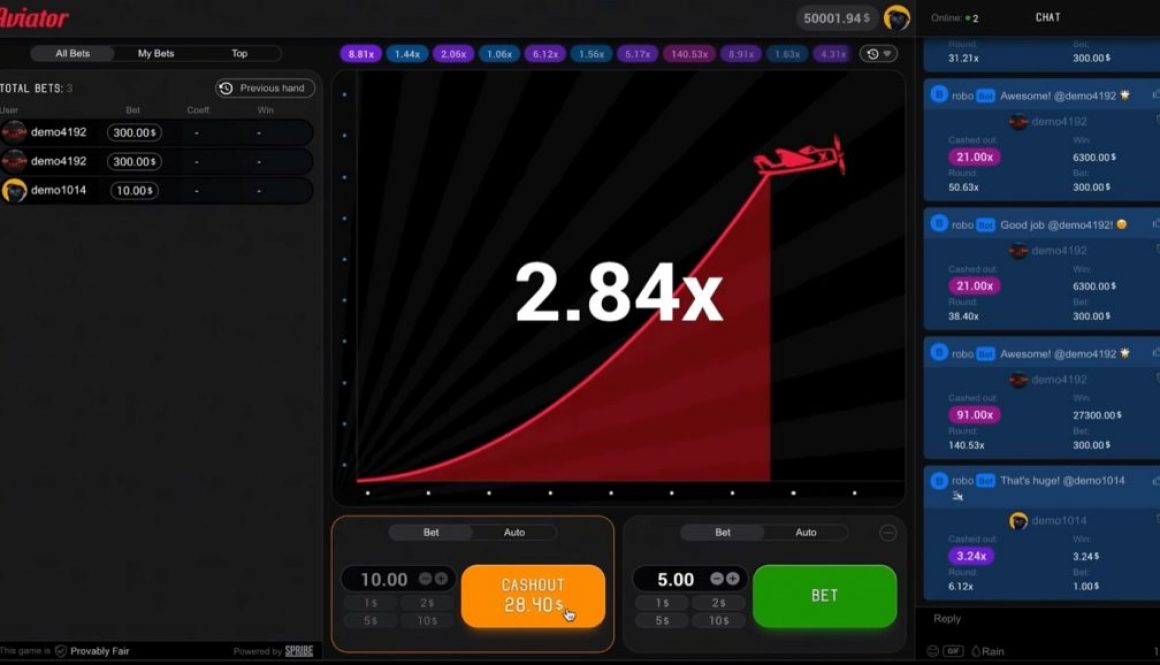
Aviator’s live bets panel includes All Bets, My Bets and Top views. The Top view can show daily, monthly and all-time wins.
A tournament leaderboard uses the operator’s chosen ranking measure, which depends on the promotion. The live Top view and a promotional race table may therefore show different information.
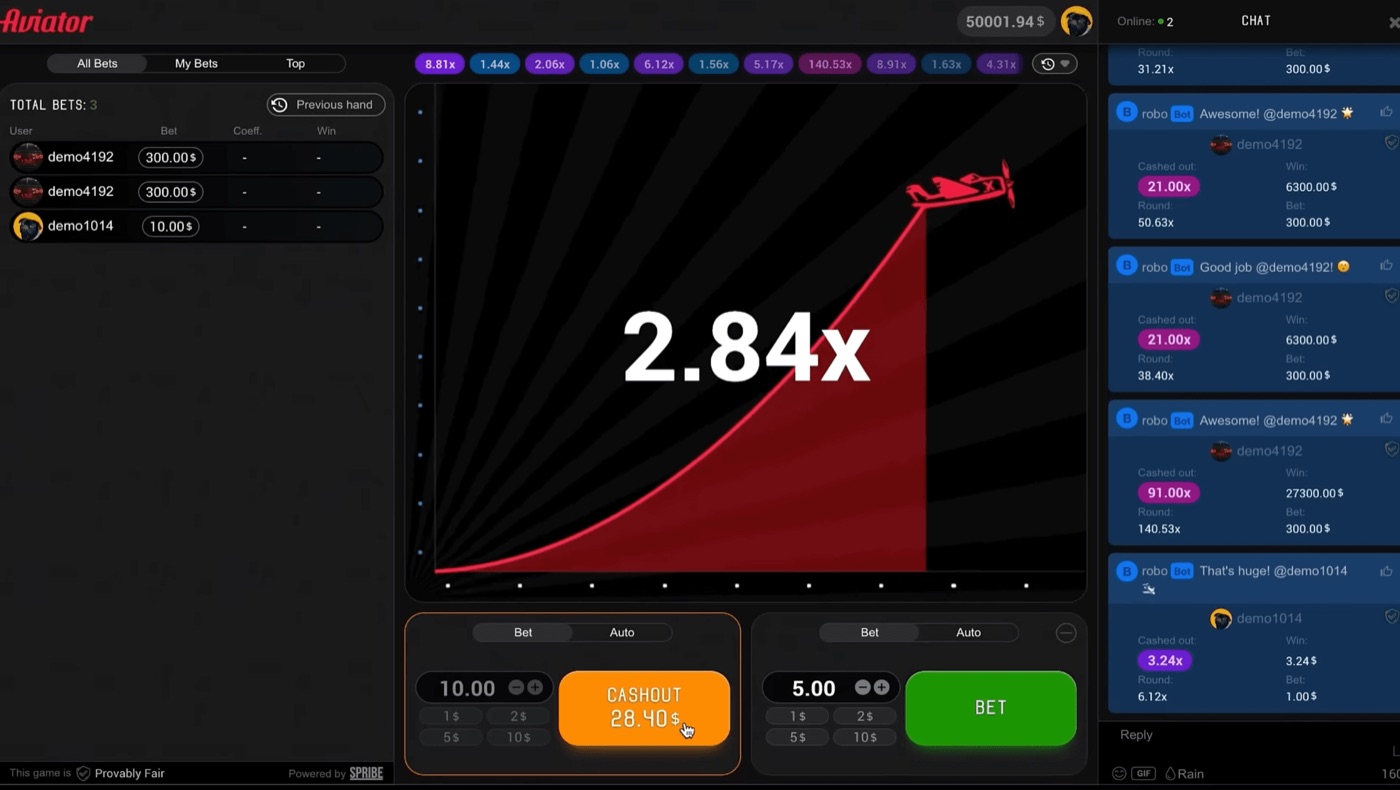
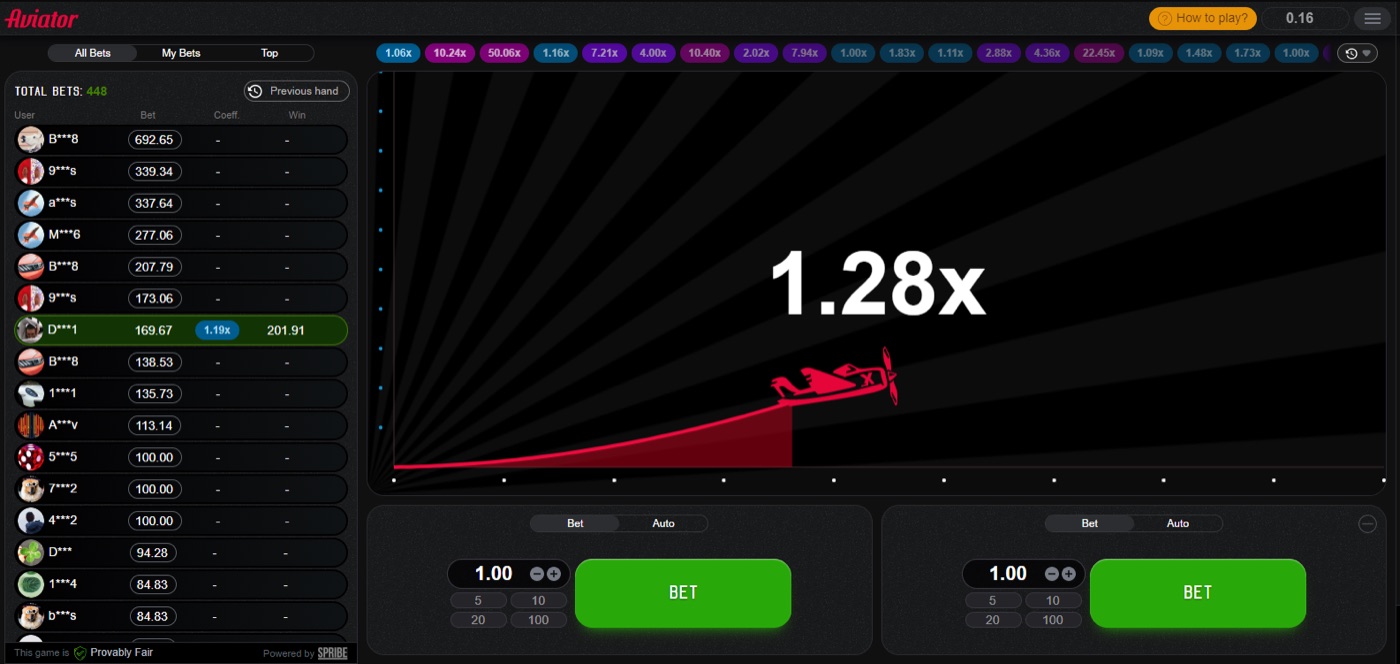
The Aviator interface shows live bets, chat and a cash-out control.
A simple leaderboard example can use profit during a stated event. If a player stakes 10 units and receives 18 units after cashing out, the gross return is 18 units and the result before other qualifying activity is an 8-unit profit.
Player
Qualifying stake
Gross return
Example result
A
10 units
18 units
8-unit profit
B
20 units
26 units
6-unit profit
C
15 units
19 units
4-unit profit
Under a profit-based ranking, Player A would rank above Player B in this example. Under a turnover-based ranking, Player B could rank above Player A because B placed 20 units rather than 10.
Before entering a race, check these leaderboard details:
The scoring method.
The minimum qualifying bet.
The event dates and times.
The number of ranked positions.
The reward for each position.
Any tie-break rule.
The method and timing for crediting free bets.
For a real-money crash game, a player can also compare the promotion with the ordinary stake risk. You can read about aviator real money in relation to crash games, multipliers, cash-out timing, stakes and free bets, but no outside page changes an operator’s race terms.
Operators can announce promotions in Aviator chat. A chat announcement is useful for finding an event, but the complete conditions should still be checked in the operator’s promotion or tournament display.
Probabilities And Cash-Outs
Aviator has a published RTP of 97% and a house edge of 3%. The probability that a round reaches multiplier m is 0.97 divided by m.
About 3% of rounds, or roughly 1 in 33, crash instantly at 1.00x. The expected value is -3% of the stake at every cash-out target, so a race does not remove the game’s mathematical edge.
Target multiplier
Probability of reaching it
1.2x
80.8%
1.5x
64.7%
2x
48.5%
3x
32.3%
5x
19.4%
10x
9.7%
20x
4.85%
50x
1.94%
100x
0.97%
Suppose a player places a 10-unit bet with an automatic cash-out at 2x. The return is 20 units if the round reaches 2x before crashing. The probability listed for that target is 48.5%, and the expected value remains -3% of the stake.
Players can use two bet panels in one round, with separate cash-outs. The interface also provides Auto Cash-Out at a preset multiplier and Auto Bet or Auto Play for 10-100 rounds, with stop-on-win and stop-on-loss settings.
A lower target can reach more rounds but still carries the 3% edge.
A higher target can produce a larger return but occurs less often.
Two bets can use separate cash-out targets.
Auto features repeat the selected instructions; they do not improve the odds.
A tournament score may reward frequent small wins, large individual wins or total profit, depending on the operator. The scoring system can change which cash-out approach earns a higher rank, but it cannot change the probability of the underlying rounds.
Fairness And Tournament Play
Before each Aviator round, the server publishes a SHA-256 hash of the server seed. The crash point is fixed before take-off, and client seeds from players are combined with the server seed.
After the round, the inputs are revealed and can be checked with the verification tool inside the game. Neither the operator nor Spribe can change the result after the round starts.
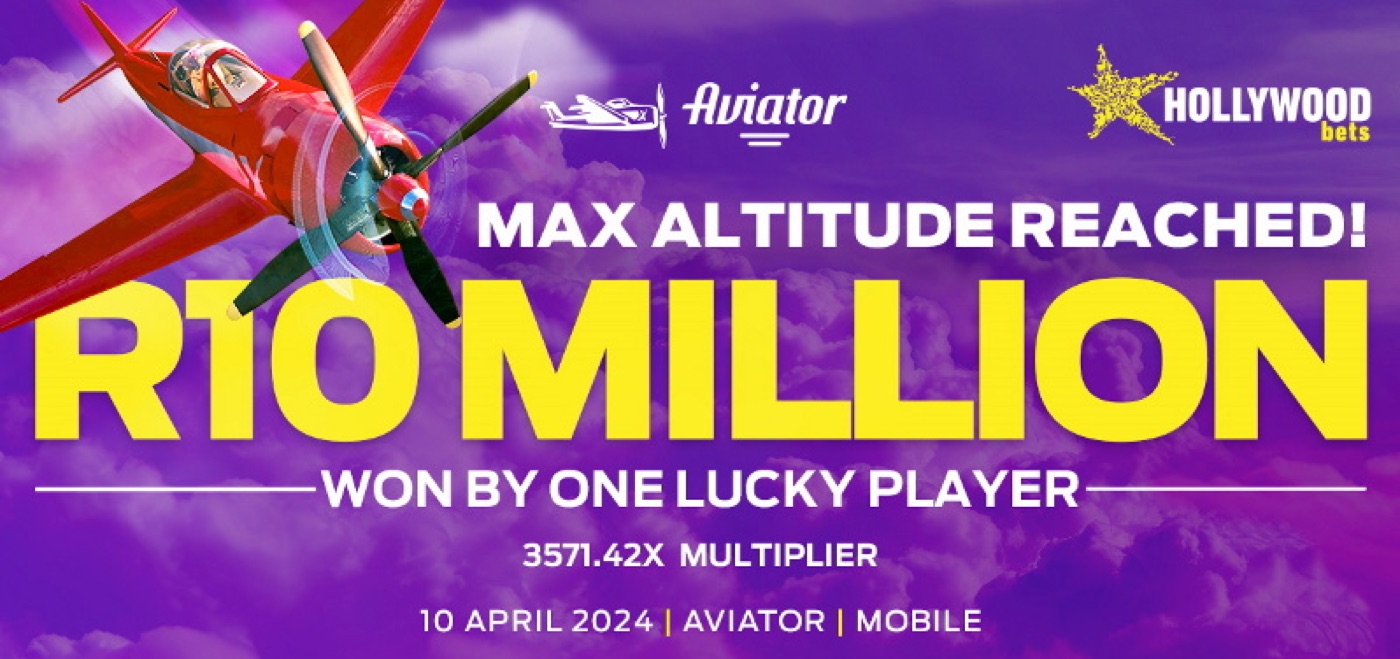
Hollywoodbets recorded an R10 million Aviator win on 10 April 2024.
Cash-out timing still matters. A cash-out request must reach the server before the crash, so latency or a slow device can cause a time-out.
A recorded result does not prove that a player will rank well. The fair-round process checks how the crash point was generated, while the tournament rules determine how the operator measures the player’s activity.
The following points help separate game mechanics from promotion mechanics:
Provably fair verification relates to the round result.
Leaderboard scoring relates to the operator’s competition rules.
Free-bet crediting relates to the operator’s promotion terms.
Cash-out timing relates to the player’s request reaching the server before the crash.
A tournament cannot make an independent round predictable.
There is no standalone official Aviator app from Spribe. Aviator runs inside a licensed operator’s website or app, while apps labelled “Aviator Predictor” are third-party products and cannot predict a crash point committed by hash.
Players should set a loss limit before entering a race and avoid chasing a leaderboard position. A player can practise in demo mode without registration before using money.
Using The Interface
Aviator works in desktop, tablet and mobile browsers and was built for low bandwidth and budget devices. The interface includes a round-history display showing previous multipliers at the top.
The game also includes an in-game chat, a Provably Fair badge and typical quick-stake buttons. These tools help players place and review bets, but they do not change the next round’s result.
A practical tournament workflow is:
Open Aviator through the operator’s website or app.
Read the race or tournament conditions.
Confirm the minimum qualifying stake and scoring method.
Set a stake and, if wanted, an automatic cash-out.
Review the leaderboard without assuming that the current order is final.
Check the reward and expiry conditions before accepting free bets.
Operators set their own win caps per round, and Spribe has not published a maximum multiplier. Hollywoodbets lists a maximum win of R5M per bet and R10M per round, while Betway South Africa lists a maximum win of $250,000 per round.
Those figures apply to the named operator examples. They are not universal Aviator limits, so a player should check the active operator display before entering a race.
Operators may also place Aviator in different menus. Betway South Africa lists it under Casino or Instant Games, BetKing Nigeria lists it under Menu, Casino and Aviator, and 1xBet lists it in the Casino or crash section as game ID 52358.
Aviator FAQ
Aviator launched in early 2019, and Spribe released Aviator 2.0 on 15 August 2019. Aviator 2.0 was 40% faster and included a redesigned mobile interface, chat with emojis and GIFs, and the Rain feature.
The game offers about 60-90 rounds per hour, with a few seconds between rounds. Tournament rules, qualifying stakes and free-bet rewards remain dependent on the operator running the promotion.
What is an Aviator tournament?
An Aviator tournament is an operator promotion that ranks eligible players according to published activity or results. The operator sets the qualifying stake, scoring method, event period, leaderboard places and rewards.
Do all Aviator bets count towards a race?
Not necessarily. The operator can require a minimum stake, a specific event entry, a stated turnover amount or another condition, so the promotion terms decide which bets qualify.
Can free bets predict the crash point?
No. Free bets provide promotional betting credit when an operator grants them, but the crash point is fixed before take-off through the provably fair process.
How does Rain Promo differ from a tournament?
Rain Promo drops free bets into the Aviator chat, and the first players to tap “claim” receive them. A tournament ranks qualifying players over an event according to the operator’s rules.
Can an Aviator predictor improve my leaderboard position?
No. The crash point is committed by hash before the round, and prediction is impossible. Third-party predictor apps, APKs and signal bots do not change the round probabilities or the operator’s leaderboard rules.
What happens if cash-out times out?
The cash-out request may have reached the server after the crash because of latency or a slow device. The request must reach the server before the crash for the cash-out to register.
A 1.50x cash-out turns a $10 Aviator stake into $15 before any later multiplier matters. A slot spin does not give the player that same in-round exit choice. The two products may appear beside each other in a casino menu, but they use different formats.
Aviator is Spribe’s crash game. It has no bonus round, no reels, and no slot-style spin cycle. A multiplier rises from 1.00x until the round crashes. The player chooses when to cash out, while the result is fixed before take-off. Slot games normally present a completed spin result instead of a rising multiplier that the player can leave during play.
Aviator Game Format
Spribe launched Aviator in January 2019. The game first went live on Adjarabet in February 2019.
Spribe describes Aviator as a social multiplayer game with an increasing curve that can crash at any time. That description separates it from a slot game, where the central action is a spin across reels or symbols.
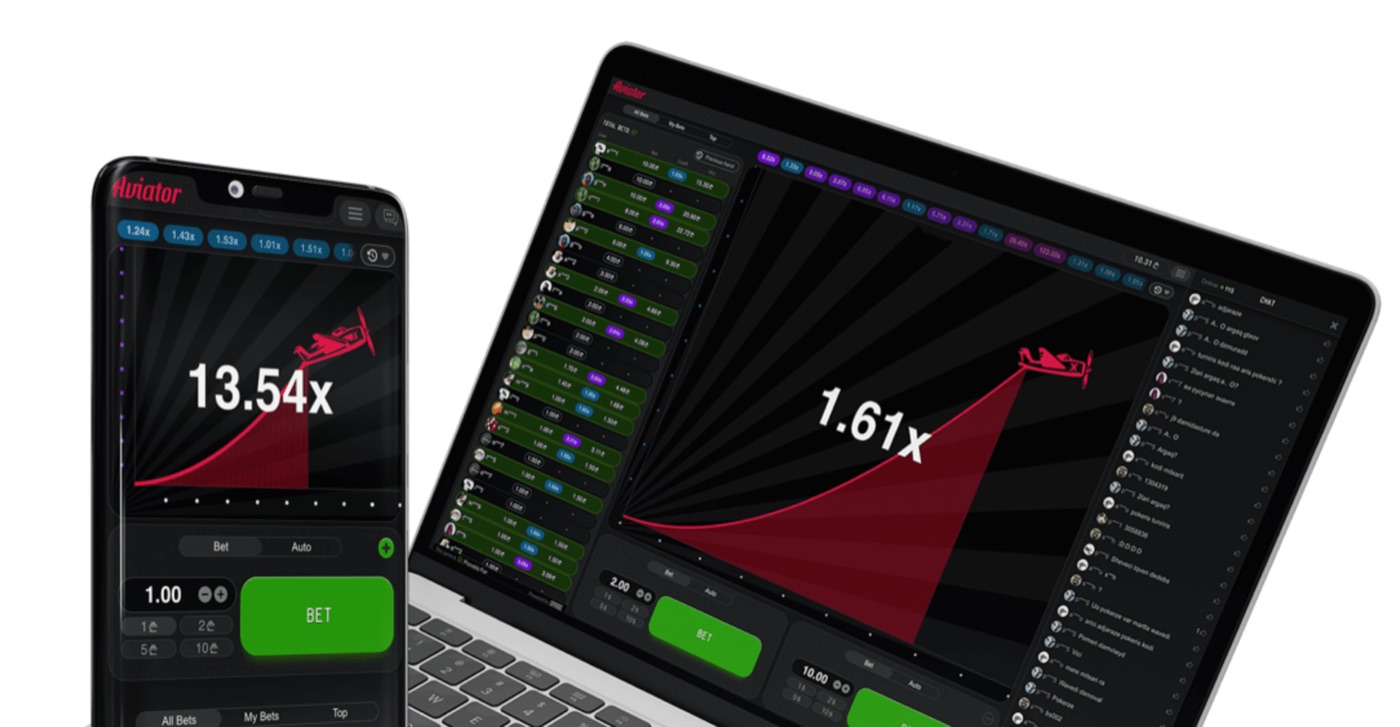
Aviator displays different live multipliers on a phone and a laptop.
Aviator does not use a bonus round. It also does not use a reel layout as its main game mechanic. The visible plane and rising multiplier show the current round, while the crash ends it.
Aviator is a crash game and instant game.
The round starts at 1.00x.
The multiplier increases until the crash point.
The player can cash out before the crash.
The game has no bonus round.
Aviator 2.0 arrived on 15 August 2019. Spribe said that release was 40% faster, lighter for slow connections and low-end phones, and built with a redesigned mobile interface. It also added chat with emojis and GIFs and a Rain feature.
That social layer differs from the usual slot experience. Aviator shows live bets, player names or labels in its panels, recent multiplier history, and in-game chat. A slot may offer symbols, paylines, free spins, or other features, but those features are not part of Aviator’s core format.
Round Speed And Pacing
An Aviator round lasts about 8 to 30 seconds. The game provides about 60 to 90 rounds per hour.
A few seconds separate one Aviator round from the next. Slot pacing depends on the player’s spin actions and the game design, but a slot spin resolves as a separate result rather than as a rising multiplier that stays live for several seconds.
The difference is easy to see with two examples. An Aviator player may stake $10, watch the multiplier reach 1.61x, and cash out for $16.10. Another player may wait for 5.00x and lose the full stake if the crash occurs at 3.20x.
Aviator appears inside a mobile casino lobby alongside other games.
A slot player usually decides whether to spin again after the previous result. An Aviator player makes an additional decision during the round. The game therefore places more attention on timing, although timing does not remove the house edge.
Choose a stake before the round begins.
Watch the multiplier rise after take-off.
Cash out manually before the crash, or use a preset target.
Accept the result if the crash arrives first.
Aviator also supports Auto Bet and Auto Play for 10 to 100 rounds. Stop-on-win and stop-on-loss settings can end the selected sequence. These tools change how bets are placed, not the mathematical result of each round.
Slot games can also run quickly, but their pacing does not create the same cash-out point. A slot player normally receives the spin result after the reels stop. Aviator keeps the result unresolved for a short period while the multiplier is visible.
Player-Controlled Cash-Out
Aviator offers two bet panels in each round. Each panel has a separate cash-out choice.
The game includes Bet and Auto tabs. Auto Cash-Out lets the player set a multiplier in advance, while manual cash-out requires the request to reach the server before the crash.
Suppose the target is 2.00x. A $5 stake produces $10 if the player cashes out at that target. If the round crashes at 1.85x, the target is not reached and the $5 stake is lost. If the round passes 2.00x, the preset cash-out can settle the bet at the chosen level.
Manual cash-out uses the player’s action during the round.
Auto Cash-Out uses a preset multiplier.
Two bet panels allow separate cash-out targets.
Auto Play can place bets across 10 to 100 rounds.
Stop-on-loss can stop an automated sequence after losses.
Cash-out is not a guaranteed escape from a losing round. A request must reach the server before the crash. Latency or a slow device can cause a cash-out time-out, and a request that arrives after the crash cannot change the result.
Aviator’s provably fair system fixes the crash point before take-off. Before each round, the server publishes a SHA-256 hash of the server seed. Client seeds from players are combined with it, and the inputs are revealed after the round so the result can be checked with the verification tool inside the game.
Neither the operator nor Spribe can change a result after the round starts. This explains the result process, but it does not turn cash-out into a risk-free feature. A player still has to choose a target and accept the possibility of an instant crash.
For a comparison of a crash game, multiplier and cash-out choices, some players may search for aviator game hollywoodbets while reviewing bookmaker menus and stake settings. The link does not change the underlying odds or the timing of a cash-out request.
RTP And Crash Odds
Aviator has an RTP of 97%. Its house edge is 3%.
The expected value is -3% of the stake at every cash-out target. A strategy can change variance, but it cannot change that edge.
Multiplier
Probability the round reaches it
$10 return if cashed out
1.20x
80.8%
$12
1.50x
64.7%
$15
2.00x
48.5%
$20
3.00x
32.3%
$30
5.00x
19.4%
$50
10.00x
9.7%
$100
20.00x
4.85%
$200
50.00x
1.94%
$500
100.00x
0.97%
$1,000
The probability formula is 0.97 divided by the target multiplier. About 3% of rounds, or roughly 1 in 33, crash instantly at 1.00x. That makes Aviator a high-variance game even when a player selects a low cash-out target.
Slot RTP values vary by game. The figures in this comparison do not assign one RTP to every slot, because a slot’s RTP depends on the specific game. Aviator’s published 97% figure can be compared with a particular slot’s stated RTP only when that slot’s own figure is available.
JetX has an RTP range of 96.2% to 98.9%.
Spaceman has an RTP of 95.5%.
Aviatrix has an RTP of 97%.
Aviamasters has an RTP of 97%.
A higher target creates a smaller chance of reaching that target and a larger return when it succeeds. A lower target creates a larger chance of reaching it and a smaller return. Neither choice removes the 3% house edge.
Slots And Bonus Rounds
Aviator has no bonus round. Slot games may include bonus rounds, but the presence and design of those rounds depend on the specific slot.
Aviator uses one rising multiplier as its main event. A slot uses a spin result and may add features such as free spins or symbol combinations.
The distinction matters because a slot bonus round can extend play after a qualifying spin. Aviator does not move into a separate bonus stage. Each round starts, rises, and ends at the crash point.
The Aviator plane remains in flight while the multiplier rises.
A slot can present a known paytable with values for symbols and feature triggers. Aviator instead presents target multipliers and probabilities. A player comparing the products should therefore compare the actual game rules, not only the label used in a casino lobby.
Aviator has no bonus round.
Aviator uses a crash point instead of reel combinations.
Aviator gives the player a cash-out decision during the round.
A slot spin normally gives a completed result after the reels stop.
A slot bonus feature depends on the individual game.
Free bets and Rain are separate from a bonus round. Rain Promo drops free bets into the in-game chat, and the first players to tap “claim” receive them. Operators can also grant free bets individually, in batches, or through an API. These promotional tools do not change Aviator into a slot.
Interface And Access
Aviator runs inside a licensed operator’s website or app. Spribe does not provide a standalone official Aviator app.
The game works in desktop, tablet, and mobile browsers. It was built for low bandwidth and budget devices.
A player can find two bet panels, the Bet and Auto tabs, and a round-history display at the top of the screen. The live bets panel includes All Bets, My Bets, and Top views, with daily, monthly, and all-time wins shown in the relevant view.
Round history shows previous multipliers.
The live bets panel shows current betting activity.
Quick stake buttons support typical stake selections.
The Provably Fair badge identifies the verification area.
In-game chat carries player messages and operator announcements.
A demo mode exists through an operator demo or demo.spribe.io and requires no registration. Demo play can show the interface and cash-out process without using a real stake.
There is no single Aviator app from Spribe to download. Apps using names such as “Aviator” or “Aviator Predictor” on Google Play, Softonic, Uptodown, and APK mirrors are third-party clones. Some use virtual coins, no-real-value disclaimers, or advertising.
Prediction apps and Telegram signal bots cannot know the next crash point. The crash point is committed by hash before the round, and public maths cannot reveal a future result before the required inputs are disclosed.
Stakes And Player Choices
Typical Aviator stakes range from about $0.10 to $100 per bet, depending on the operator. Win caps per round are also set by each operator.
The maximum multiplier is not published by Spribe. Guides quote different figures, so a stated maximum should not be treated as a universal Aviator rule.
An operator may set a minimum stake, a maximum stake, or a maximum win that differs from another operator. Those settings do not change the core RTP of 97%, but they change the amount a player can risk or receive in that operator’s version.
Some guides use auto cash-out at 1.5x to 2x. They also describe splitting two bets, with one cashing out at 1.5x to 2x and the other targeting 5x to 10x. These are betting approaches, not ways to beat the house edge.
Other guides warn against Martingale. Ten consecutive losses would require a stake 1,024 times the base stake under a doubling system. Fibonacci and D’Alembert systems also do not beat the 3% edge.
Set a loss limit before starting.
Set a win limit before starting.
Keep each stake within a chosen bankroll percentage.
Use demo mode to learn the controls.
Do not treat past multipliers as predictions.
Rounds are independent. Patterns, graph analysis, a best time to play, and a strategy chart cannot change the probability of the next round. Playing off-peak may produce a smoother connection, but it does not improve the odds.
Only gamble with money you can afford to lose, and stop when your preset limit is reached.
Aviator FAQ
Aviator uses a 97% RTP. Its rounds last about 8 to 30 seconds.
Slot games use different rules and RTP values, while Aviator uses a rising multiplier and player-controlled cash-out.
Is Aviator a slot game?
No. Aviator is a crash game and instant game from Spribe. It has no reels and no bonus round. The player watches a multiplier rise and chooses whether to cash out before the crash.
Can players cash out manually?
Yes. Aviator provides manual cash-out and Auto Cash-Out. Manual cash-out must reach the server before the crash, so latency or a slow device can cause a time-out.
What is Aviator’s RTP?
Aviator’s RTP is 97%, with a 3% house edge. The expected value is -3% of the stake at every cash-out target. A target changes variance, not the edge.
Can an app predict Aviator?
No. The crash point is fixed before take-off through the provably fair process. Predictor apps and signal bots cannot reveal the next result, and third-party apps using the Aviator name are not Spribe’s standalone app.
Can players try Aviator for free?
Yes. A demo mode exists through an operator demo or demo.spribe.io and needs no registration. Demo mode shows the game process without requiring a real stake.
Why did my cash-out time out?
The cash-out request may have reached the server after the crash. Guides associate time-outs with latency or a slow device. The request must arrive before the crash to settle the bet.
Finding free OnlyFans pages is easy; understanding how those pages change over time is harder. A page can start at no cost, earn through tips and pay-per-view messages, and later introduce a paid tier or raise prices on individual posts. This article explains why that happens, how to spot the shift early, and what each change means for your budget and your renewal date.
The platform itself does not push these updates to you. OnlyFans has no built-in discovery feed or directory, which is exactly why ranking sites exist in the first place. That gap means the responsibility for tracking a page’s terms sits with the subscriber. BestOnlyFans and similar directories list pages by category, but they cannot monitor every pricing change for you.
The good news is that the signals are usually visible before the change takes effect. Most pages do not switch models overnight without leaving a trace. What follows is a practical guide to reading those traces and deciding what to do about them.
Why Free Pages Change Over Time
A free page is not a permanent state. It is a pricing decision that a creator can revise whenever the numbers stop working. When a page is set to $0, the creator earns through pay-per-view messages and tips rather than subscriptions. If that mix underperforms, moving to a paid tier is a normal business adjustment.
The platform takes a 20% fee on everything, including subscriptions, tips, and pay-per-view purchases. The creator keeps 80%. That split applies no matter which model the page uses, so the choice between free and paid is about volume and predictability, not about the fee itself.
Here is the sequence most pages follow when they adjust their model.
Traffic grows and the free page reaches a stable audience size.
Pay-per-view revenue flattens while message volume stays high.
The creator tests a small paid tier alongside the free content.
Subscriber conversion is measured over several weeks.
The free tier is narrowed or closed if the paid tier holds.
Public terms on the page are updated to reflect the new model.
Tip: before subscribing to any free page, take a screenshot of its current terms. If the model changes later, that screenshot is your reference point for what you originally agreed to.
Early Signals of a Model Shift
Most changes announce themselves before they take effect. The signals are small and easy to miss if you are not looking for them. Watching for them gives you time to decide rather than react.
The first signal is usually a change in message frequency. A page that previously sent occasional pay-per-view offers may begin sending them weekly. The second is a shift in what the free feed contains, often becoming shorter or more promotional.
Observable changes that often precede a new paid tier or a pay-per-view price increase include:
Bio text adds a link or mention of a separate paid page.
Pinned post is replaced with one describing a new tier.
Pay-per-view prices rise in small increments over two or three weeks.
Free posts become less frequent while messages become more frequent.
A welcome message changes to mention subscription options.
The page posts a poll asking what subscribers would pay for.
None of these alone proves a change is coming. Two or three together over a short period is a stronger indication. When you see that pattern, it is reasonable to assume the terms you signed up under will not last.
Not every change deserves the same response. Some are cosmetic, some affect what you pay, and some affect when you pay. The table below matches common changes to a sensible subscriber reaction.
Type of change
Sensible response
Free page adds an optional paid tier
Stay on the free tier and watch whether free content continues
Pay-per-view prices rise by a small amount
Reduce purchases rather than cancel; the free access remains
Free tier is closed entirely
Decide whether the new price fits your monthly budget before renewing
Subscription price raised on an existing paid page
Check your renewal date; the new price applies from the next cycle
Free page becomes paid with no notice
Treat as a new subscription decision, not a continuation
Paid subscription prices across the platform range from $4.99 at the minimum to $49.99 at the maximum. Most paid pages sit between $4.99 and $15, with an average of roughly $5 to $10. There is no base price below $4.99, though promotional first months may dip under it.
That range matters when a free page converts to paid. A move to $4.99 is a small monthly cost; a move to $25 is a different decision entirely. Read the number before you read anything else.
When the Change Lands Mid-Cycle
Timing is where most confusion happens. If a creator raises the subscription price, auto-renew stops. Your existing access lasts until the current paid period ends, but the subscription will not renew automatically at the old rate.
In practice this means you keep what you paid for until the period runs out, and then you make a fresh decision. Nothing is charged at the new price without your action. The table below shows what to expect across a typical month.
Days 1 to 7: the change is announced and auto-renew is disabled.
Days 8 to 20: access continues at the terms you already paid for.
Days 21 to 28: you receive a reminder that renewal will not happen automatically.
Final day of the period: access ends unless you subscribe again at the new price.
If your subscription was already set to renew before the change, the old rate applies for that one cycle. After that, the new terms govern. Keep an eye on the date rather than the price, because the date is what determines when your decision is due.
Deciding to Stay, Pause, or Leave
Once the change is clear, the decision is yours and it does not need to be made quickly. Asking a few direct questions keeps the choice practical rather than emotional.
The questions worth asking before renewing a page that has changed terms:
Does the new price fit the same monthly budget line the page occupied before?
Is the content I actually used still included at the new tier?
Has the free portion shrunk to the point where it no longer serves its purpose?
Would I subscribe to this page today if I were seeing it for the first time?
Is there another page in the same category offering comparable terms?
A pause is a legitimate answer. Because auto-renew stops when prices change, doing nothing is itself a decision to leave at the end of the period. That default works in your favour if you are undecided.
If you want a broader view of what free pages currently exist, a directory such as onlyfans free female can help you compare categories before committing to a new subscription. BestOnlyFans maintains a similar listing, and both exist because the platform offers no discovery tool of its own.
What Your Bank Statement Will Show
A changed subscription does not appear as a new merchant. It appears as the same descriptor with a different amount, which is why the shift can go unnoticed for a cycle or two. The charge is processed through the platform, not directly by the creator.
If auto-renew stopped, you will simply see no charge at the renewal date. That absence is the signal, not a separate line item. If you resubscribe at the new price, the descriptor stays the same and only the figure changes.
Mistakes to avoid when reviewing statements for changed terms:
Assuming an unchanged descriptor means an unchanged price.
Missing a skipped renewal and reading it as a billing error.
Confusing a promotional first-month rate with the standard rate.
Overlooking the 20% platform fee when estimating what a price increase reflects.
Deleting confirmation emails that record the rate you originally agreed to.
Keeping a Simple Change Log
A change log does not need to be elaborate. A single note per page, updated only when something shifts, is enough to catch a pattern before it costs you money.
Record four things: the page name, the current model, the price you are paying, and the date you last checked. If a page changes from free to paid, the log shows you the gap between the two states. If a pay-per-view price creeps upward, the log shows the direction of travel.
Review the log once a month, ideally a few days before your usual renewal dates. That single habit turns a series of small surprises into a predictable line of entries.
When to Treat a Change as a Red Flag
Most changes are ordinary adjustments. A smaller number follow a pattern that suggests the page is being repurposed rather than simply repriced. The table below separates the two.
Normal adjustment
Pattern worth questioning
Price rises once and stays stable
Price rises repeatedly over a short period
Free tier narrows but remains active
Free tier is removed and replaced with a high-priced tier
Terms updated with a visible notice
Terms changed silently with no post or message
Pay-per-view prices move with content length
Pay-per-view prices rise with no change in what is offered
A single entry in the right-hand column is not proof of anything. Two or three together, especially within one billing cycle, justify pausing rather than renewing. The decision costs you nothing when auto-renew has already stopped. BestOnlyFans refreshes its rankings every month.
FAQ
Can a free page become paid without warning?
Yes. A creator can change the subscription price at any time, and the platform does not require advance notice to subscribers.
What happens to my access if the price goes up?
Auto-renew stops when the price changes. Your access continues until the current paid period ends, then requires a new subscription at the new rate.
How much do paid pages usually cost?
Prices range from $4.99 to $49.99, with most pages between $4.99 and $15 and an average of roughly $5 to $10.
Does a free page still earn money?
Yes. Free pages earn through pay-per-view messages and tips, with the platform taking 20% and the creator keeping 80%.
OnlyFans subscribers in different countries routinely see different numbers for the same creator, and the gap is rarely explained at checkout. This guide explains how regional price variations are applied, why your settled charge often differs from the displayed figure, and what access boundaries exist when you travel or use privacy tools.
The platform has no built-in discovery feed, so ranking directories like BestOnlyFans exist to compare creators across regions. A rate shown in euros, pounds, or Canadian dollars is not always a straight conversion of the creator’s base figure.
How OnlyFans Implements Regional Price Variations
Creators set a base rate, and that base rate is denominated in US dollars. The platform then presents that figure in your local currency at the point of sale. In most cases this is a straightforward conversion, but the display figure is locked at the moment you subscribe rather than recalculated daily.
Purchasing power adjustments are the second layer. On some pages the platform may display a regional figure that does not track the exchange rate precisely. This is uncommon, but it exists, and it explains why two subscribers in neighbouring countries can report different numbers for an identical page.
Paid subscriptions run from $4.99 at the minimum to $49.99 at the maximum, though the typical range sits between $4.99 and $15, with averages clustering around $5 to $10. Free pages are set to $0 and earn through pay-per-view messages and tips instead. Note that promotional first months can fall below the $4.99 floor, for example a $3 first month, but the base price itself may not.
The creator sets a USD base rate for the page.
The platform converts that rate into your local currency using an internal rate.
A regional purchasing power adjustment may be applied, though this is uncommon.
The display price locks at the subscription moment and does not move with later currency swings.
If the exchange rate shifts between signup and renewal, your renewal does not automatically mirror the change. The same lock applies when a creator raises their price: auto-renew stops, and existing access continues until the paid period ends.
Currency Conversion Mechanics and Hidden Costs
A displayed price in your local currency is not the amount your bank will settle. The platform’s figure is the starting point, not the final number on your statement.
Card networks apply their own exchange rate, which usually differs slightly from the rate used on the platform’s display. On top of that, many issuers add a foreign transaction fee, typically between 0 percent and 3 percent, depending on the card and the country of the issuer.
When a checkout offers to charge you in your home currency rather than the merchant’s currency, that convenience often carries a premium of roughly 3 to 5 percent. Declining the offer and letting your card network handle the conversion is usually cheaper.
The platform’s displayed local price, which is your baseline.
The card network’s actual exchange rate applied at settlement.
Your issuer’s foreign transaction fee, commonly 0 to 3 percent.
Any dynamic currency conversion premium offered at checkout, often 3 to 5 percent.
These layers explain most of the complaints about prices that changed between the page and the statement. They did not change.
Tip: screenshot the displayed price immediately before you confirm payment. It is the single most useful piece of evidence if the settled amount later differs by more than a trivial margin.
Access Boundaries for VPN and Travel Scenarios
Geography affects more than price. The platform applies fraud screening to payment attempts, and a mismatch between your account’s normal location and your current connection can trigger a re-verification request.
Crossing into a different billing region is where friction starts, and persistent VPN use can look like an account takeover attempt rather than a legitimate subscriber. Content availability is a separate matter entirely. Creators can apply their own region-blocking choices, so a page that loads at home may be unavailable elsewhere for reasons that have nothing to do with your payment method.
Same-region travel: no meaningful impact on billing or access.
Cross-region travel: may trigger a payment re-verification request.
Persistent VPN use: can raise fraud flags on the account.
Creator region-blocking: content availability varies independently of price.
Tax documentation requirements: these vary by your subscriber jurisdiction, not the creator’s.
Using a privacy tool to appear in a cheaper country rarely produces a cheaper subscription. The displayed figure may shift, but the payment screening is designed to catch exactly that pattern, and the card verification hold of $0.10 exists partly to confirm the instrument is genuine. That hold is refunded within days.
BestOnlyFans Regional Pricing Data Displays
BestOnlyFans captures displayed pricing across regions and surfaces it on ranking cards, so a subscriber can see how a page’s rate presents in more than one currency before committing. The methodology flags atypical variances rather than hiding them inside an average, and each flag points to the specific region where the display diverges.
That flagging matters because a large gap between two regions for the same creator usually signals a purchasing power adjustment or a stale conversion rate, not a genuine discount for one audience. Ranking cards are a starting point for verification, not a substitute for checking the live checkout figure.
Region
Displayed Range
Variance from USD Base
United States
USD base, no conversion
0% (reference)
European Union
EUR conversion, VAT implications
Small, plus applicable tax
Selected emerging market
Local currency, possible adjustment
Occasionally wider, flagged by methodology
It shows the shape of the problem: the same creator base rate presents differently depending on where the subscriber sits, and only one of those three rows is a pure conversion. If you are browsing rankings for a specific market, the best onlyfans canada models listings illustrate how a single regional view can compress a wide range of underlying base rates into one comparable column.
Budgeting Across Multiple Currency Environments
Subscribers who earn in one currency, bank in another, and travel through a third face genuinely unpredictable monthly totals. The problem is not any single subscription. It is the accumulation of small conversion differences across five or ten renewals landing on different days.
The fix is administrative rather than financial. Pick one currency as your reporting currency, convert everything into it for tracking purposes, and stop trying to reason about costs in the currency you happened to see at checkout. Four adaptations keep a multi-currency budget stable:
Designate one primary currency for all monthly cap tracking.
Apply a 5 percent conversion buffer to every non-primary-currency spend.
Cluster subscription renewals into periods where a single currency dominates your transactions.
Reconcile settled amounts weekly against your estimates rather than monthly.
Weekly reconciliation catches rate drift early. A subscription business model depends on predictable renewals, and a 5 percent buffer absorbs most of the noise without distorting your overall picture.
Detecting and Disputing Anomalous Regional Charges
Most billing surprises are conversion artefacts. A minority are genuine errors, and those deserve a documented challenge rather than a passive cancellation. The difference between the two is whether the variance is consistent with known conversion layers.
Start with three detection steps, then choose from three dispute paths depending on what the evidence shows. Keep the sequence intact, because a dispute opened without documentation is usually closed without resolution.
Screenshot the displayed price before payment.
Compare the settled amount within 48 hours.
Flag any variance exceeding 10 percent for investigation.
Platform support handles display errors, such as a figure that did not match the checkout screen. Your card issuer handles unauthorised conversion, including dynamic currency conversion you did not consent to. Local consumer protection authorities are the route for systematic overcharging that affects multiple subscribers in the same region.
For unauthorised charges, treat the case as you would any suspect transaction. The same verification habits that protect against phishing attempts apply here: confirm the merchant, confirm the amount, and never resolve a billing question through a link sent by an unexpected message.
The Platform Fee Across Currency Conversions
The platform takes 20 percent of everything, and the creator keeps 80 percent. That split is consistent, but it is calculated on the converted amount rather than the creator’s original base figure.
Rounding is not a hidden fee. It is arithmetic. When a base rate is converted, the fee applies to the converted number, and the creator’s payout reflects that converted base.
USD Base
Converted Price
Platform Fee
Creator Receives
$9.99
Converted at internal rate
20% of converted figure
80% of converted figure
$14.99
Converted at internal rate
20% of converted figure
80% of converted figure
$24.99
Converted at internal rate
20% of converted figure
80% of converted figure
PPV messages unlock up to $50, paid chat commonly runs $3 to $5 per message, and tips can reach $100. Each of those flows through the same 20 percent fee and the same conversion logic, which is why a detailed statement can show several slightly different effective rates for the same creator.
FAQ
Can I see a creator’s USD base rate before subscribing in my local currency?
Not directly. The platform presents the price in your local currency by default, and there is no toggle that reveals the underlying dollar figure. Ranking directories that capture multi-region displays are the practical workaround, and the checkout screen remains the authoritative number for your own account.
Why does my OnlyFans charge show a different amount than displayed at checkout?
Your card network applies its own exchange rate, your issuer may add a foreign transaction fee of 0 to 3 percent, and dynamic currency conversion can add a further 3 to 5 percent premium if you accept it at checkout.
Will using a VPN to appear in another country unlock different prices?
The displayed figure may change, but the payment screening is built to notice location mismatches. Persistent VPN use can raise fraud flags, trigger re-verification, or block the payment entirely.
How does OnlyFans handle sales tax or VAT in different regions?
Tax is applied according to your billing jurisdiction rather than the creator’s location. That is why a European subscriber may see a converted price plus applicable tax, while a subscriber elsewhere sees the converted price alone.
OnlyFans refunds operate within narrow boundaries that subscribers often misunderstand before subscribing. BestOnlyFans research into platform policies reveals that most refund requests fail because users expect consumer protections that digital content platforms rarely extend. Understanding the actual pathways available—platform mediation, documentation requirements, and the serious trade-offs of chargeback disputes—helps set realistic expectations and improves outcomes when genuine problems occur.
The OnlyFans Terms of Service on Refunds
Section 8 of the OnlyFans Terms of Service states that subscription fees are generally non-refundable except where required by law or in cases of platform error. This language places substantial discretion in OnlyFans hands while acknowledging narrow exceptions that vary by jurisdiction.
The policy distinguishes between content consumed and content unavailable. A subscriber who accesses any material during a billing period has technically received the service paid for, regardless of whether the experience met expectations. This mirrors standard practice across streaming services, software subscriptions, and other digital platforms.
Technical failures and fraud exceptions
Technical failures represent the clearest exception. If platform infrastructure prevents access despite successful payment, refund eligibility increases. Similarly, fraudulent charges made without account holder authorization receive different treatment than disputes over content quality or creator behavior. Certain patterns of problems carry enough weight to overcome the general non-refund policy. Understanding which situations OnlyFans recognizes as valid helps focus efforts productively rather than pursuing hopeless complaints.
Critical timing consideration: refund requests submitted within 24 hours of subscription purchase, before significant content access, receive more favorable review than those filed days into a billing cycle.
Scenarios Where Refund Requests Have Merit
BestOnlyFans methodology analyzes support ticket outcomes to identify situations where documentation and policy align favorably for subscribers. These cases require specific evidence rather than general dissatisfaction.
Duplicate charges for same period
Creator inactive for 7+ days after subscription start
Account access impossible due to platform error
Fraudulent subscription initiated without authorization
Paid content never delivered after unlock
Creator inactivity requires documentation showing zero posts across the claimed period. Platform errors need evidence linking payment confirmation to access failure. Fraud cases demand proof the account holder did not initiate the transaction.
Disappointment with content style, quality, or frequency generally fails unless it rises to material misrepresentation. A creator advertising daily videos who posts nothing for a week differs from one whose aesthetic preferences simply mismatch subscriber taste.
Platform Mediation vs. Bank Chargeback Paths
Two distinct processes exist for recovering funds: direct OnlyFans support tickets and credit card chargeback disputes. These paths differ in speed, requirements, and consequences. Platform mediation preserves account standing even when requests fail. Support agents review evidence and apply policy consistently. Outcomes include full refund, partial credit, or denial with explanation.
Factors for choosing a resolution path
Amount in dispute
Desire to retain account access
Timeline urgency
Strength of documentation supporting the claim
Resolution Path
Timeline
Account Impact
Success Rate
OnlyFans Support Ticket
5-14 business days
None if denied
Low for consumed content
Bank Chargeback
Provisional in 10 days, final in 90
Account termination risk
Moderate with strong evidence
Chargeback disputes initiate through card issuers, not OnlyFans. Banks provisionally credit accounts while investigating, creating immediate financial relief. However, OnlyFans treats successful chargebacks as violations of terms, often terminating accounts permanently.
Documenting Your Case for Maximum Clarity
Documentation quality often determines refund success more than complaint volume or emotional appeal. Specific evidence types carry weight with support reviewers and bank investigators.
Essential documentation includes: exact transaction date and amount; OnlyFans transaction ID; screenshot of payment confirmation; record of any creator communication; timestamped evidence of issue; and previous subscription history with same creator.
Transaction IDs appear in email confirmations and payment processor records. Screenshots should capture full browser windows showing URLs and timestamps. Creator communications include direct messages, comments, or any platform interaction relevant to the dispute.
Pattern evidence strengthens cases involving repeated problems. A subscriber who documents three consecutive months of technical failures builds stronger claims than one reporting isolated incidents. Banking records showing successful prior transactions with the same creator also help distinguish genuine technical problems from buyer remorse.
Chargeback filing order
For chargeback filings, assemble materials in this order: payment processor receipt showing the $0.10 verification hold alongside the actual charge, account screenshot demonstrating access failure with visible timestamp, and any error messages received. This sequence matches how bank investigators evaluate digital service disputes.
What Happens After You Submit a Refund Request
The review process follows predictable stages that vary in duration based on request volume and complexity.
Automated acknowledgment (immediate)
Queue assignment (24-48 hours)
Initial review for completeness
Evidence evaluation by support agent
Resolution notification with explanation
Missing documentation triggers requests for additional information, extending timelines. Complete submissions move faster through evaluation. Complex cases involving fraud allegations or technical investigations may exceed standard timeframes.
Resolution notifications specify whether refunds process to original payment methods or platform credits. Partial refunds reflect proportional calculations for accessible versus inaccessible content. Denials include policy citations that inform whether escalation options exist.
When refunds are granted, processing time depends on the original payment method. Credit card reversals typically clear within 5-10 business days once OnlyFans approves. Platform credits apply immediately but cannot be withdrawn as cash—only spent on future subscriptions, PPV purchases, or tips. Subscribers seeking actual cash recovery should explicitly request original payment method refunds rather than accepting default credit allocations.
When Chargebacks Become Necessary and Risky
Bank disputes become appropriate when platform mediation fails and evidence supports claims of non-delivery, fraud, or material misrepresentation. Understanding reason codes and required evidence improves success rates.
Chargeback Reason Code
Required Evidence
OnlyFans Response
Account Standing Impact
Goods/Services Not Received
Proof of payment, proof of non-access
Contests with access logs
Warning or suspension
Unauthorized Transaction
Fraud report, IP mismatch evidence
Investigates account security
Investigation pending
Credit Not Processed
Refund request records, timeline
Provides policy justification
Termination likely
Provisional credits appear within 10 business days of dispute filing, though final resolution extends to 90 days. Banks may reverse credits if merchants successfully contest claims. Documentation retention throughout this period remains essential.
Account termination represents the most significant chargeback risk. OnlyFans policy permits permanent bans for users with chargeback history, treating the practice as breach of terms regardless of individual dispute merit. Subscribers with account history, remaining balances, or platform credits must weigh this consequence carefully.
The financial arithmetic of chargebacks deserves attention. A subscriber disputing a $10 subscription who holds $50 in unused tips and $15 in remaining PPV credit faces total account value of $65 at risk for recovering $8 after the 20% platform fee. Even successful chargebacks thus produce net losses when account assets exceed disputed amounts. OnlyFans does not transfer balances or content history to new accounts after termination.
Preventing Disputes Through Pre-Subscription Checks
Due diligence before subscribing eliminates most situations requiring refunds. Several verification steps reduce subscription risk. Reviewing creator activity patterns, understanding pricing structures, and consulting independent resources helps avoid common pitfalls.
Many subscribers find value in checking the best of onlyfans for recent pricing changes and creator reliability indicators before committing to paid subscriptions. This preliminary research complements platform-provided information.
Review last 30 days of public activity
Check BestOnlyFans or similar for recent pricing changes
Verify promotional vs. standard pricing
Read subscriber feedback patterns
Confirm content type matches expectations
Creator reliability indicators
Creator activity patterns reveal reliability. Consistent posting schedules, responsive messaging, and transparent pricing changes indicate lower dispute likelihood. Sudden price increases or promotional structures that obscure standard rates warrant additional scrutiny.
Standard platform pricing
Platform pricing knowledge prevents confusion. Standard subscriptions range from $4.99 minimum to $49.99 maximum, with promotional first months occasionally lower. PPV messages unlock up to $50, while paid chat typically runs $3-$5 per message. Tips can reach $100. Understanding these structures helps identify anomalous charges.
Paid subscription range: $4.99 to $49.99 (base rates never below $4.99)
Promotional first months may drop below $4.99 temporarily
Typical paid range clusters around $5-$10
Free pages set price to $0, earning only via PPV and tips
Critical price change mechanics: when a creator raises their subscription price, auto-renew stops immediately. Existing access continues until the paid period ends, but users must manually resubscribe at the new rate. This prevents surprise charges while creating potential gaps in access. Subscribers relying on uninterrupted content streams should verify price stability before committing to long-term creator relationships.
Because OnlyFans has no built-in discovery feed or directory, ranking sites fill information gaps. the ranking site methodology indexes pricing history and activity reliability that platform search lacks. This absence of native discovery means subscribers cannot browse for creator comparisons without third-party assistance, increasing reliance on external verification before purchase.
FAQ
Can I get a refund if a creator stops posting after I subscribe?
Refund eligibility depends on timing and documentation. If the creator goes completely inactive within days of subscription and remains so for a week, platform support may grant partial refunds. However, intermittent posting or slowed frequency generally does not qualify. Document the inactivity period with screenshots showing no new content across the claimed timeframe.
How long do I have to request a refund on OnlyFans?
No formal deadline exists, but practical limits apply. Requests within the current billing cycle receive stronger consideration than those filed after renewal. For technical failures, document immediately and submit within days. Bank chargeback rights typically expire at 60-120 days depending on card issuer policies, creating an outer boundary for disputes.
Will OnlyFans ban me for filing a credit card dispute?
Accounts with successful chargebacks face termination risk under platform terms. OnlyFans treats chargebacks as contract violations regardless of dispute merit. The platform may ban immediately or after accumulating multiple disputes. Consider this consequence carefully if your account contains purchased content, remaining balances, or subscription history you wish to preserve.
What if the creator offers a refund but OnlyFans does not process it?
Creator refunds and platform refunds operate independently. Creators can issue credits through their dashboards, but these remain subject to OnlyFans processing and fee structures. If a creator agrees to refund but nothing processes, request documentation of their refund initiation and escalate to platform support with this evidence. Without such documentation, platform support typically defers to standard policy.
Au blackjack en direct chez Casinozer, vous misez contre un croupier réel filmé, et vos décisions se prennent depuis votre écran.
Ce que couvre le sujet
Le blackjack en direct, aussi appelé blackjack live, est une table filmée en continu. Un vrai croupier distribue les cartes devant la caméra. Vous placez vos mises depuis votre ordinateur ou votre téléphone. Le résultat ne vient pas d’un logiciel qui tire les cartes au hasard. Il vient d’un paquet réel, mélangé et distribué en direct. Casinozer propose ce format dans sa rubrique casino en direct. La plateforme cite Evolution Gaming comme fournisseur de jeux live.
Ce sujet porte uniquement sur deux points : les règles du jeu et les mises. Les règles définissent le déroulé d’une main. Les mises définissent ce que vous engagez à chaque tour. Les deux se combinent à chaque table. Le montant de votre mise conditionne le gain possible. Le respect des règles conditionne la validité de votre main.
La valeur des cartes et le but du jeu.
Le déroulé complet d’une main en direct.
Les types de mises disponibles à table.
Les conditions du compte liées au jeu.
Chez Casinozer, le blackjack live s’inscrit dans un catalogue de plus de 3 000 jeux. Ce catalogue comprend aussi des machines à sous et des jeux de table. Le live reste un format à part. Il demande une connexion stable et un compte approvisionné. Le dépôt minimum annoncé est de 20 €.
Comment cela fonctionne
Vous ouvrez une table depuis la rubrique casino en direct. Une vidéo en continu montre le croupier et la table. Une zone de mise apparaît sur votre écran. Vous choisissez un jeton puis une position. Le croupier annonce la fin des mises. Il distribue ensuite deux cartes visibles à chaque joueur. Il garde une carte visible pour lui.
Le but reste simple. Votre main doit dépasser celle du croupier sans dépasser 21. Les cartes numérotées gardent leur valeur. Les figures valent dix points. L’as vaut un ou onze points selon votre main. Un as et une carte à dix points forment un blackjack. Cette main est la plus forte du jeu.
Vous placez votre mise dans le temps imparti.
Le croupier distribue deux cartes à chaque position.
Vous choisissez de tirer ou de rester.
Le croupier complète sa main selon des règles fixes.
Les mains gagnantes sont payées automatiquement.
Après vos deux premières cartes, plusieurs choix s’offrent à vous. Tirer ajoute une carte à votre main. Rester conserve votre total actuel. Doubler ajoute une mise égale à la première. Vous recevez alors une seule carte supplémentaire. Séparer transforme une paire en deux mains distinctes. Chaque nouvelle main demande une mise supplémentaire.
Le croupier ne décide rien. Il suit une règle fixe affichée à la table. En général, il tire jusqu’à un total donné. Cette règle varie selon les tables. Vérifiez-la sur l’écran d’information de la table choisie.
Les conditions à connaître
Chaque table de blackjack live affiche une mise minimale et une mise maximale. Ces limites changent d’une table à l’autre. Elles s’affichent avant votre entrée en jeu. Certaines tables acceptent de petites mises. D’autres visent les joueurs qui misent plus gros. Le dépôt minimum sur Casinozer est de 20 €. Le retrait minimum annoncé est de 50 €.
Vous pouvez approvisionner votre compte par carte bancaire ou portefeuille électronique. Le site accepte aussi Bitcoin, Ethereum, Litecoin et USDT. Les dépôts en crypto se font sans conversion préalable. La vérification d’identité est demandée avant le premier retrait. Prévoyez ce délai si vous gagnez à une table de casinozer blackjack en direct pendant votre première session de jeu en ligne.
Élément
Détail vérifié
Dépôt minimum
20 €
Retrait minimum
50 €
Cryptomonnaies acceptées
Bitcoin, Ethereum, Litecoin, USDT
Vérification d’identité
Obligatoire avant le premier retrait
Le bonus de bienvenue peut sembler lié au live. La formule classique offre 100 % du premier dépôt jusqu’à 500 €. Elle ajoute 50 tours gratuits. La condition de mise est de ×35 sur le bonus. La validité est de 14 jours. Les tours gratuits visent les machines à sous. Vérifiez la contribution du blackjack live aux conditions dans la section Promotions. Cette contribution peut être réduite ou nulle selon les offres en vigueur.
Ce que vous devez vérifier
Casinozer est exploité par Altacore N.V., enregistrée à Curaçao. Le site affiche une licence du Curacao Gaming Control Board. Une licence Anjouan complète ce cadre, numéro ALSI-202412042-FI2. Le casino n’est pas agréé par l’ANJ. Or l’Autorité nationale des jeux est le seul régulateur des jeux d’argent en France. Un site sans agrément ANJ opère hors du cadre protecteur français.
Avant de miser, comparez ce cadre avec celui d’un casino agréé en France. Cette vérification prend quelques minutes. Elle porte sur la licence, les limites et les conditions. Un casino sous régulateur français applique des règles de protection renforcées.
Vérifiez la licence affichée en bas de page du site.
Lisez les limites de mise de la table choisie.
Consultez les conditions de bonus avant tout dépôt.
Confirmez les méthodes de retrait disponibles sur votre compte.
Côté accès, l’inscription demande une adresse e-mail et un mot de passe. Viennent ensuite vos informations personnelles. L’authentification à deux facteurs est disponible. Activez-la pour sécuriser votre compte. Il n’existe pas d’application native sur les stores. La version mobile est une application web installable depuis le navigateur. Aucun fichier APK n’est fourni par l’éditeur. Évitez tout fichier d’installation trouvé sur une source inconnue.
Le jeu d’argent est réservé aux personnes majeures de 18 ans et plus. En France, Joueurs Info Service répond au 09 74 75 13 13, 7 jours sur 7. L’appel est non surtaxé. Le casino propose aussi des outils d’auto-exclusion depuis le compte. Fixez-vous un budget avant d’ouvrir une table. Ne misez jamais pour récupérer une perte.
FAQ
Quel est le dépôt minimum pour jouer au blackjack live chez Casinozer ?
Le dépôt minimum annoncé est de 20 €. Chaque table affiche ensuite sa propre mise minimale.
Casinozer est-il agréé par l’ANJ ?
Non. Le site opère sous licences de Curaçao et d’Anjouan. L’ANJ reste le seul régulateur des jeux d’argent en France.
Le bonus de bienvenue fonctionne-t-il au blackjack en direct ?
La formule classique impose une mise ×35 sur le bonus. La contribution du live à ces conditions est à vérifier dans la section Promotions.
Comment retirer ses gains après une session de blackjack live ?
Le retrait minimum est de 50 €. Une vérification d’identité est demandée avant le premier retrait.
Cresus Casino propose plus de 2 000 jeux dans son catalogue. Cette plateforme en ligne attire les joueurs français depuis son lancement en 2014.
Cet article examine en détail l’offre de ce casino : critères de sélection, bonus de bienvenue, variété des jeux, conditions de retrait et service client. Vous trouverez également une section de questions fréquentes pour répondre aux interrogations essentielles.
Critères pour choisir Cresus Casino
Le choix d’un casino en ligne repose sur plusieurs éléments objectifs. Cresus Casino opère sous la licence de Curaçao 1668/JAZ délivrée à l’exploitant CNCL Games NV. Cette licence, bien que non reconnue par l’Autorité Nationale des Jeux en France, garantit un cadre réglementaire international.
Le taux de retour global annoncé s’élève à 96,2 %. Ce pourcentage indique la part des mises redistribuée aux joueurs sur l’ensemble du catalogue. Un chiffre supérieur à 96 % se situe dans la moyenne haute des casinos en ligne.
La sécurité des données repose sur la conformité RGPD. Les transactions bénéficient d’un chiffrement SSL. Le générateur de nombres aléatoires fait l’objet d’audits par iTech Labs. Ces contrôles assurent l’équité des résultats de jeu.
Critère
Détail
Source
Licence
1668/JAZ Curaçao
CNCL Games NV
Lancement
2014
Historique opérateur
Taux de retour
96,2 %
Annonce officielle
Audit RNG
iTech Labs
Certification externe
La réputation de Cresus Casino s’appuie sur sa longévité. Dix ans d’existence représentent une durée significative dans ce secteur. La cresus casino auto evaluation permet de vérifier régulièrement ses habitudes de jeu.
Les éditeurs présents sur la plateforme constituent un autre critère de choix. Evolution Gaming, Pragmatic Play, Play’n GO, Betsoft, Nolimit City, Yggdrasil, Playson et Quickspin fournissent les jeux. Ces noms garantissent une qualité technique reconnue.
Play’n GO : machines à sous classiques et innovantes
Evolution Gaming : tables de casino en direct
Pragmatic Play : slots et live casino
Nolimit City : mécaniques de jeu poussées
Le site fonctionne en HTML5 responsive. Aucune installation d’application n’est nécessaire. Chrome, Safari et Firefox supportent la plateforme sur mobile comme sur ordinateur.
Offre de bienvenue
Le bonus de bienvenue de Cresus Casino correspond à 150 % du premier dépôt. Le montant maximum atteint 300 €. Le dépôt minimum requis s’établit à 20 €. Les gains issus de ce bonus sont crédités sans conditions de mise.
Cette absence de wagering constitue un avantage notable. La plupart des casinos imposent un multiplicateur de mise avant retrait. Chez Cresus, l’argent gagné reste disponible immédiatement. La validité du bonus est limitée à 14 jours après activation.
Caractéristique
Valeur
Pourcentage bonus
150 %
Plafond bonus
300 €
Dépôt minimum
20 €
Validité
14 jours
Conditions de mise
Aucune sur les gains
Les promotions régulières complètent l’offre de bienvenue. Le Crazy Wednesday offre 15 % de bonus, porté à 20 % pour les membres VIP. Le Happy Friday propose 30 % supplémentaires. Le week-end, un bonus de 50 % jusqu’à 100 € est disponible.
Le programme VIP compte quatre grades : Bronze, Silver, Gold et Platinum. L’accès se fait sur invitation du service client. Les avantages incluent un cashback hebdomadaire jusqu’à 15 %. Les plafonds de retrait sont relevés selon le grade. Des cadeaux d’anniversaire complètent les privilèges.
Créer un compte avec vos informations personnelles
Valider votre adresse e-mail via le lien reçu
Effectuer un premier dépôt de 20 € minimum
Le bonus de 150 % s’active automatiquement
Les gains sont crédités sans condition de mise
Catalogue de jeux
Le catalogue de Cresus Casino dépasse les 2 000 titres. Cette diversité couvre plusieurs catégories de jeux. Les machines à sous constituent la part la plus importante du portefeuille.
Les slots classiques à 3 rouleaux côtoient les vidéo slots modernes. Les mécaniques Megaways offrent jusqu’à 117 649 façons de gagner. Les éditeurs Play’n GO et Pragmatic Play dominent cette section.
Les titres emblématiques incluent Book of Dead de Play’n GO. Sweet Bonanza et Gates of Olympus, tous deux de Pragmatic Play, figurent également au catalogue. Gonzo’s Quest de NetEnt complète cette sélection de références.
Catégorie
Nombre
Exemples
Machines à sous
Majorité du catalogue
Book of Dead, Sweet Bonanza
Tables live
Plus de 70
Roulette, blackjack, baccarat
Vidéo poker
Plus de 15 variantes
Jacks or Better, Deuces Wild
Le live casino propose plus de 70 tables en direct. La roulette, le blackjack et le baccarat sont disponibles en plusieurs variantes. Les game shows comme Crazy Time et Monopoly Live ajoutent une dimension ludique. La qualité HD assure une immersion optimale.
Le vidéo poker rassemble plus de 15 variantes. Jacks or Better, Deuces Wild et Joker Poker représentent les classiques. Ces jeux combinent stratégie et hasard avec des taux de retour élevés.
Retraits et support
Les conditions de retrait chez Cresus Casino suivent des délais précis. Le traitement interne s’effectue sous 24 heures ouvrées. Les e-wallets et les cryptomonnaies bénéficient d’un crédit instantané après validation. Le virement SEPA prend 1 à 3 jours ouvrés.
Les seuils minimum varient selon la méthode. Les cartes bancaires et les e-wallets requièrent 25 € minimum. Le virement bancaire exige 50 €. Ces plafonds restent accessibles pour la majorité des joueurs.
La vérification KYC est obligatoire avant tout premier retrait. Les documents demandés incluent une pièce d’identité en cours de validité. Un justificatif de domicile de moins de 3 mois est requis. Un justificatif de paiement complète le dossier.
Le délai de validation annoncé s’étend de 24 à 48 heures.
Visa et Mastercard : retrait sous 1 à 3 jours ouvrés
Skrill, Neteller, MiFinity, eZeeWallet : instantané après validation
Bitcoin, Ethereum, Litecoin, Ripple, USDT : instantané après validation
Virement bancaire SEPA : 1 à 3 jours ouvrés
Le support client francophone est accessible par chat de 10h à 22h. Ce service fonctionne 7 jours sur 7. L’e-mail reste disponible 24 heures sur 24 pour les demandes non urgentes.
Les moyens de dépôt couvrent les usages actuels. Les cartes Visa et Mastercard sont acceptées. Les e-wallets Skrill, Neteller, MiFinity et eZeeWallet permettent des transactions instantanées. Les coupons prépayés Cashlib et Neosurf offrent une alternative anonyme. Le virement bancaire et les cryptomonnaies complètent les options.
Le dépôt minimum est fixé à 20 € sans frais.
Les outils de jeu responsable restent accessibles depuis votre panneau joueur. Vous pouvez y définir des aide aux joueurs avec des plafonds de dépôt personnalisés. L’auto-exclusion temporaire ou définitive est configurable en quelques clics.
Les limites de session permettent de contrôler le temps de jeu.
Questions fréquentes
Cresus Casino est-il légal en France ?
Cresus Casino n’est pas autorisé en France. L’opérateur ne détient pas de licence de l’Autorité Nationale des Jeux. Il n’apparaît pas sur la liste des sites légaux pour les joueurs résidant en France.
La licence de Curaçao 1668/JAZ offre un cadre réglementaire international sans reconnaissance française.
Quel est le délai de retrait moyen ?
Le traitement interne des retraits demande jusqu’à 24 heures ouvrées. Les e-wallets et cryptomonnaies créditent immédiatement après cette validation. Les virements bancaires nécessitent 1 à 3 jours ouvrés supplémentaires. La vérification KYC initiale ajoute 24 à 48 heures avant le premier retrait.
Peut-on jouer sur mobile sans application ?
Le site de Cresus Casino fonctionne sans application dédiée. La technologie HTML5 responsive s’adapte à tous les écrans. Chrome, Safari et Firefox supportent la plateforme sur smartphone et tablette. Aucun téléchargement n’est requis pour accéder aux 2 000 jeux du catalogue.
Quels documents sont nécessaires pour la vérification ?
La vérification KYC exige trois documents. Une pièce d’identité officielle en cours de validité est obligatoire. Un justificatif de domicile daté de moins de 3 mois complète le dossier. Un justificatif de paiement lié à la méthode de dépôt utilisée finalise la procédure.
Le bonus de bienvenue a-t-il des conditions de mise ?
Les gains issus du bonus de bienvenue sont crédités sans wagering. Le montant bonus lui-même n’est pas retirable. Seuls les gains générés peuvent être retirés immédiatement. Cette particularité distingue Cresus Casino des concurrents imposant des multiplicateurs de mise.
Every installed app eventually needs refreshing. If you already have the 1xBet Android application, you have probably wondered whether to wait for an automatic update or handle it yourself. The update path matters because certificates change, storage fills, and Android permissions shift beneath the surface. Before reaching that point, understanding what the original installation actually requires prevents the common stalls that leave people searching forums for answers. This compact guide moves straight through download, setup, and daily use without detours.
Download and Installation Flow
The 1xBet mobile app does not live in the Play Store, so the journey starts at the source. The APK file—the Android Package—contains everything your phone needs to run the software independently. Visit the site with your phone’s browser, locate the Android download prompt, and confirm. The file lands in your downloads folder or whichever directory your browser favours.
Now the permission step. Android treats apps from outside its store with caution. Open your phone’s settings, search for the installer permission panel, and grant your browser or file manager the right to install unknown apps. This permission is source-specific—your browser receives it, not every app on your phone. You may revoke it immediately after installation; the app remains functional. Return to your downloads, tap the APK, and proceed through the prompts. Most connections finish the process in less than a minute. 1xbet mobile betting app install apk remains a direct reference point for anyone tracking the current file location.
Three elements determine success here:
Storage space cleared before download (the APK plus unpacked files need room)
The permission granted to the correct source (browser versus file manager)
No active download interruption (broken files fail signature checks)
Where you can get the app and how its screens look depend on your location, device platform and software version.
Updates, Version Control and Data Considerations
Updates arrive through the same mechanism as the original install. You might receive a notification from the app, or you can verify it yourself. When you download a newer APK and attempt installation, Android compares certificates. Updates signed by a different certificate fail—this protects against malicious replacements, but it also means you must uninstall the old version first if the signing key has rotated. Uninstalling removes local app data including stored passwords and cached betting history. Note your login credentials before proceeding, or ensure your account recovery options remain accessible.
Automatic update schemes exist in some configurations, though manual checks remain more reliable for side-loaded software. Keep the APK file from your last successful install as a rollback option. Storage management matters: cached images from live betting streams accumulate quickly.
Inside the App: Features and Daily Use
The 1xBet Android application compresses a full betting operation into pocket-sized dimensions. Pre-match betting spans many sports, with odds adjusting in real time as new information emerges. Live betting runs parallel to actual events, with odds shifting in seconds during active play. The casino section—where available—delivers slots, table games, and live dealer streams through the same interface.
Payment handling sits within the account menu. Deposits and withdrawals route through methods configured to your region, with confirmations tracked in history logs. Account verification, password changes, and notification preferences all reside in settings. The app remembers your session until you explicitly log out or clear data.
Where you can get it and how the interface looks depends on your location, device OS and version of the app.
Source Verification, Common Problems and Alternative Access
Verifying your download source prevents the majority of installation headaches. Compare the download URL against known references. Check file properties if your tools allow—legitimate APKs carry consistent naming patterns and proper certificate metadata. If the source feels uncertain, do not proceed.
Problems cluster in predictable categories. Parse errors usually indicate incomplete downloads or Android version mismatches. App not installed warnings often trace to conflicting signatures or insufficient space. Slow performance typically stems from cached data bloat. Solutions run parallel:
Clear browser cache and re-download the complete APK
Free additional storage before retrying installation
Uninstall conflicting versions when certificates mismatch
Restart the device to release locked processes
The mobile website serves as a functional alternative when the app encounters obstacles. It requires no installation, no permission adjustments, and no storage allocation. Features mirror the app closely, though live streaming and push notifications may behave differently. Bookmark the mobile site for immediate access. Those experiencing persistent difficulties can find support through a problem gambling helpline alongside technical assistance channels.
Set limits on time and expenditure before beginning any betting session.
FAQ
Why does Android block the installation even after I downloaded the APK?
The permission granted for unknown sources applies to specific apps—your browser or your file manager—not to the system generally. Verify which app you are using to trigger the install, then grant that specific source permission in settings. The toggle location varies by Android skin and version.
What actually happens if I uninstall before installing a new version?
Uninstalling removes the application and its locally stored data, including cached login states and temporary files. Your account itself remains on 1xBet’s servers. You will need to re-enter credentials after the fresh install, and any locally saved preferences reset to defaults.
How do I know the APK file I have matches what the site intended?
File size consistency across download attempts suggests integrity, though casual users rarely verify cryptographic signatures. The practical check: download directly from the same source each time, avoid third-party file hosts, and be suspicious of dramatically smaller or larger files than previous versions.
Why would an update fail when the old version installed fine?
Certificate mismatches trigger silent failures. If the signing key changed between versions—something that happens legitimately during corporate restructuring or security incidents—Android treats the new APK as a different app entirely. Delete the existing version before installing the new one.
Does keeping the old APK matter once I have the app running?
Retaining the previous APK provides a rollback path if the new version introduces instability on your specific device. Storage is cheap; troubleshooting time is not. Archive the file with a clear version label before deleting it.